
This page was translated automatically using artificial intelligence (DeepL). The German version is binding. More information about automatic translation
A brief study commissioned by WWF Germany
Project duration: June 2025 to November 2025
In this short study commissioned by WWF Germany, we examine the contribution that a right to swap rented accommodation can make to climate and resource protection.
Buildings play a significant role in the transition towards sustainable development. The construction and operation of buildings account for approximately 35 per cent of final energy consumption and 30 per cent of greenhouse gas emissions in Germany, and are responsible for a considerable proportion of resource use. The resource-intensive nature of providing buildings and land makes them a valuable asset that should be utilised as efficiently as possible. Alongside these environmental challenges, the shortage of affordable housing is becoming increasingly acute in many regions of Germany. The nationwide rental rate stands at 53.5 per cent, which is above the European average. At the same time, numerous housing reserves currently remain unused, as demonstrated, for example, by the debate surrounding ‘hidden housing reserves’. By optimising the use of existing housing – for example, through home swapping, subletting unused rooms or sharing detached houses – there is significant potential to save resources.
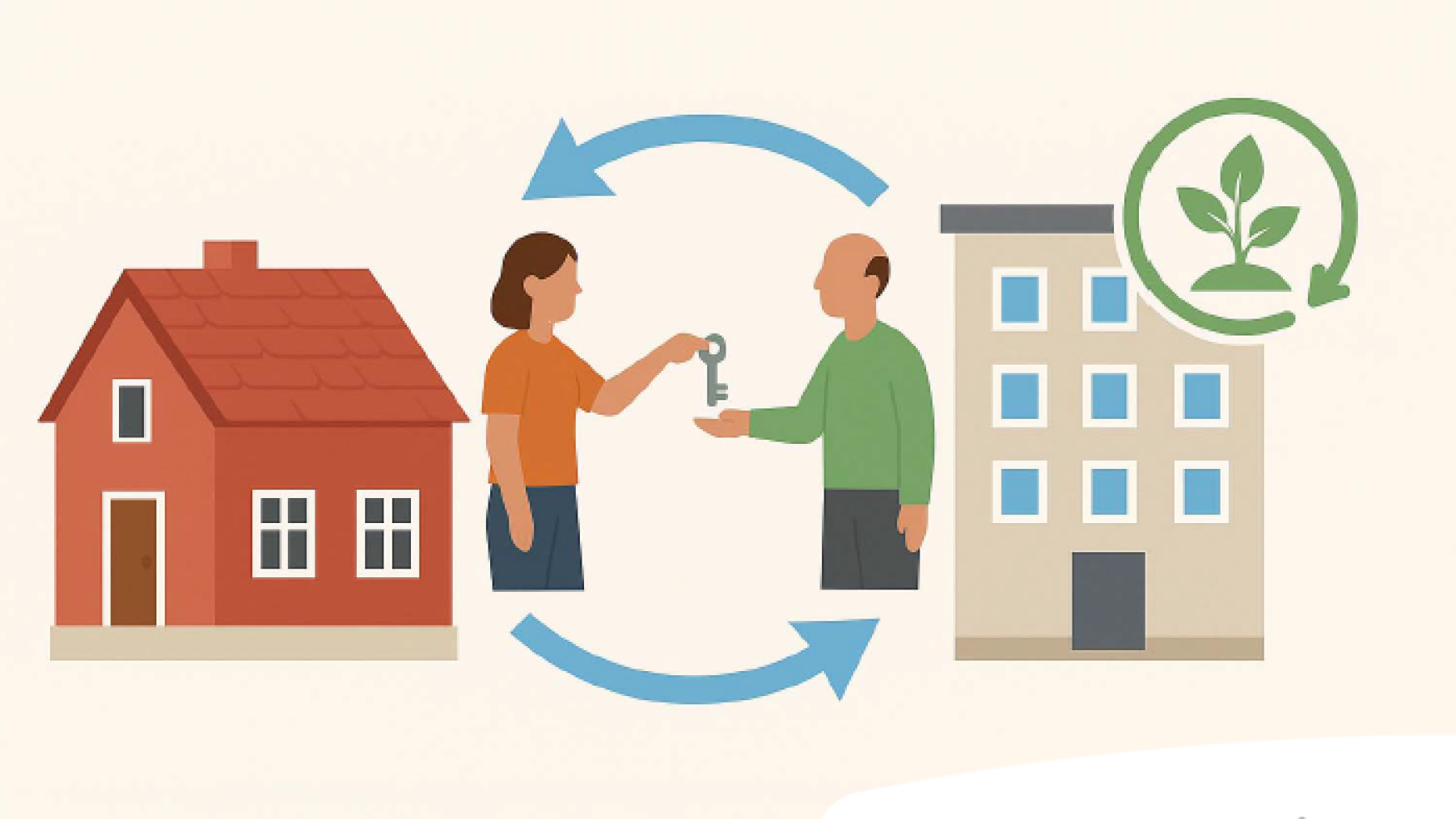
The practice of swapping rented flats can be part of the solution, as it enables existing housing reserves to be (re)activated in a sustainable manner. By swapping the flats of two tenants with the aim of ensuring that both parties’ accommodation meets their needs, existing housing can be used more effectively and new construction avoided. This applies particularly to tight housing markets. Compared with new-build housing, purpose-specific flat swaps are not only significantly cheaper but can also be implemented in a considerably shorter time, are resource-efficient and thus of great benefit to society as a whole. As the needs-based use of existing housing in Germany plays a central role in the climate-friendly and resource-efficient transformation of the housing sector, WWF Germany supports a corresponding legislative proposal for the ‘mutual transfer of residential tenancies’. Discussions on the legal framework and an assessment of possible implementation models for this are already available.
However, the environmental benefits that could result from expanding the use of the rental property exchange scheme have not yet been quantified.
This short study, commissioned by WWF Germany, examines precisely this environmental protection potential on the basis of the following research questions:
How high is the exchange potential among tenant households if the legal framework facilitates a Germany-wide right to exchange with a conditional entitlement to exchange?
What is the quantitative potential for reducing the need for new builds associated with realising this exchange potential?
What is the quantitative potential for reducing land use for housing, emissions, and material and energy resources associated with realising this exchange potential?
Publication of the brief study during the WWF webinar on 20 November 2025
On 20 November 2025, Prof. Anika Möcker presented the short study on the environmental protection potential of rental flat swaps to the public during a WWF webinar.
The results are now available and can be accessed here: Environmental protection potential through the exchange of rented flats in Germany
Project Management