

This page was translated automatically using artificial intelligence (DeepL). The German version is binding. More information about automatic translation
News Intranet
This page was translated automatically using artificial intelligence (DeepL). The German version is binding. More information about automatic translation
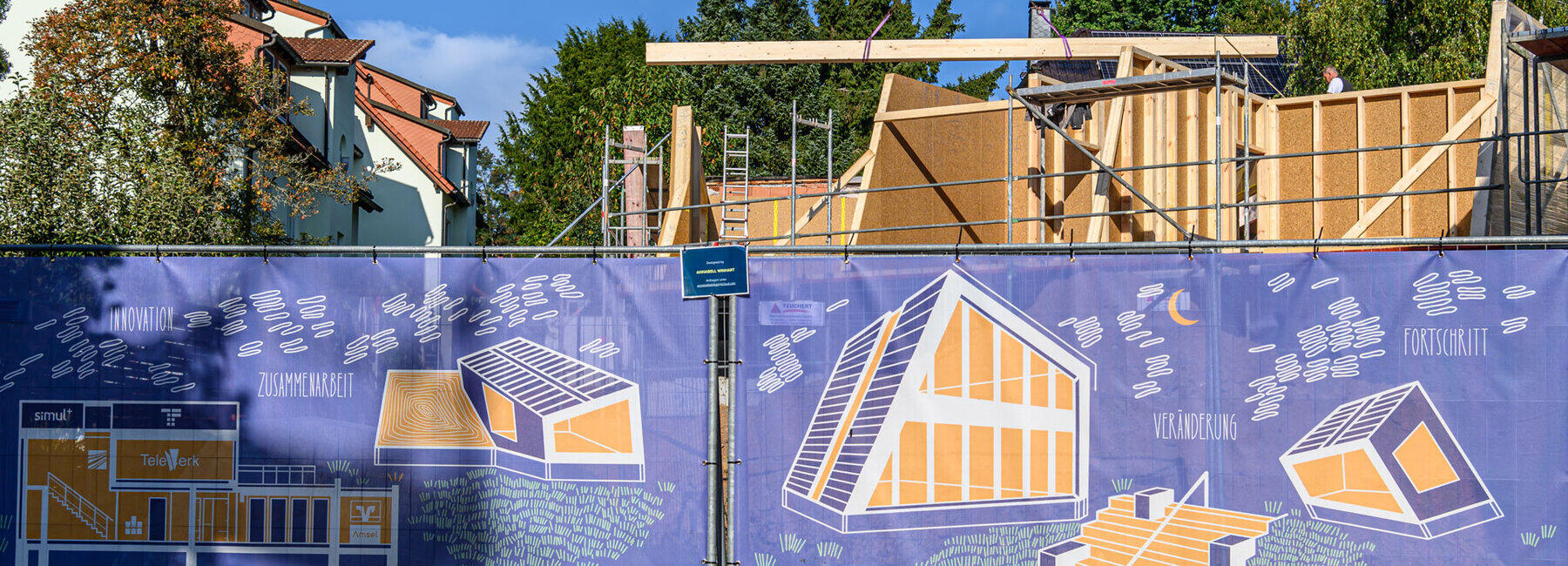
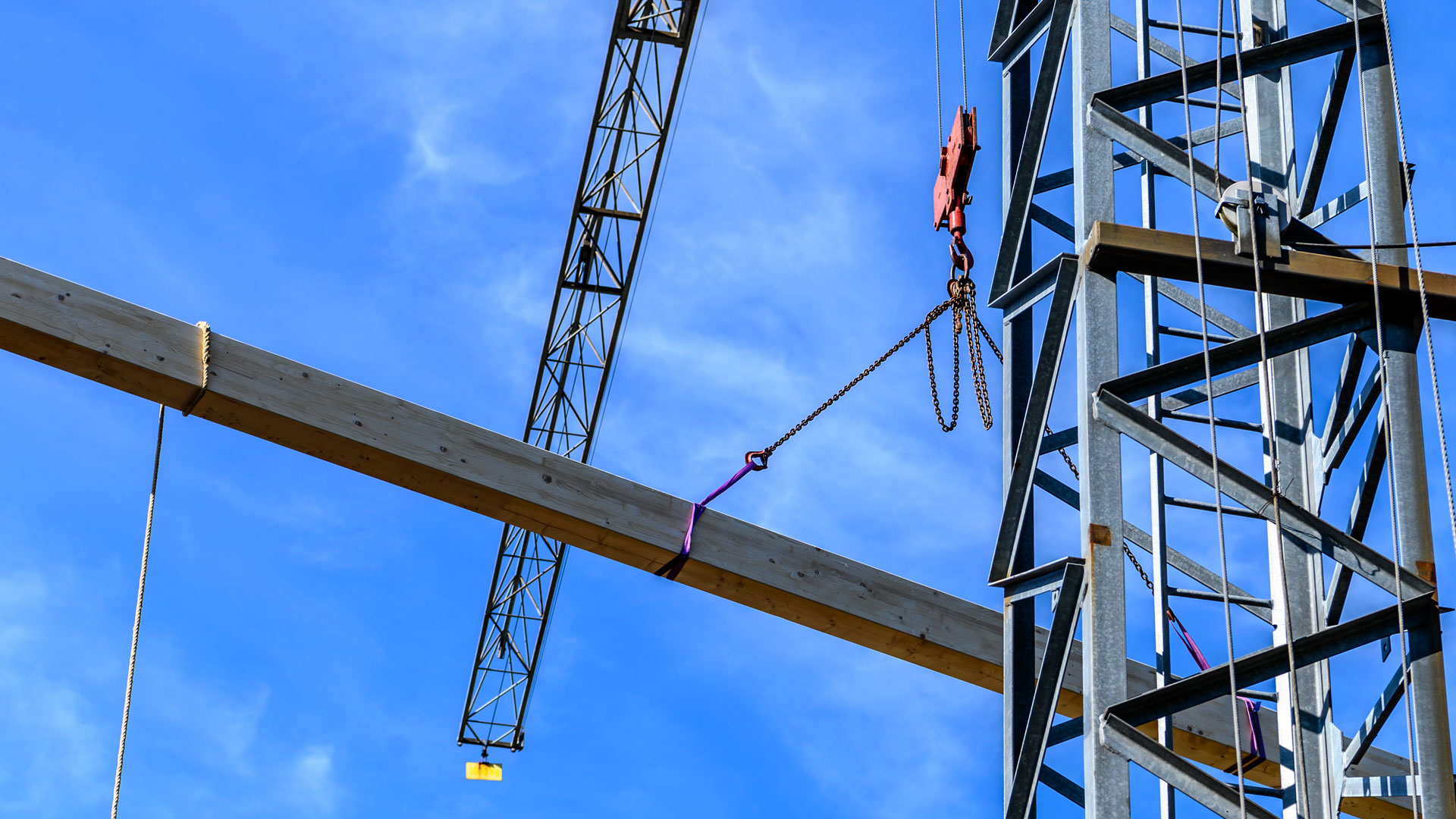
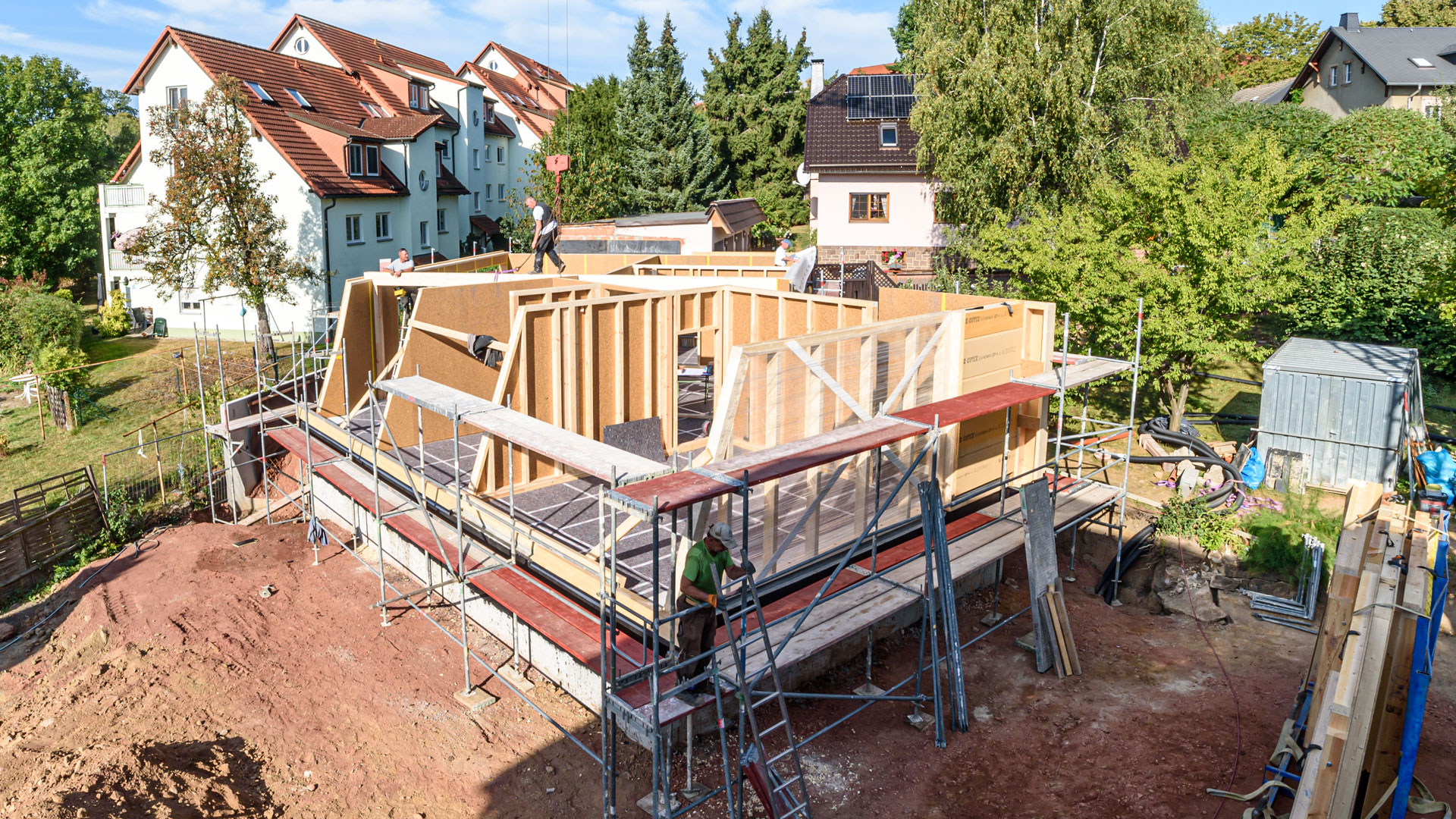
The foundation, featuring concrete core activation, has been constructed over the past few months. Since 27 September, timber construction experts from the region have been erecting the timber frame for the future Telewerk real-world laboratory on top of it.
In a figurative sense, too, Telewerk stands on a stable and sustainable foundation: Mittweida University of Applied Sciences is pooling its own expertise here with that of other strong institutions. They aim to research and demonstrate in practice what modern living and working in rural areas can look like, thereby driving the region forward. Mittweida University of Applied Sciences, as the consortium leader, is partnered in this project by the Fraunhofer Institute for Transport and Infrastructure Systems IVI in Dresden and Volksbank Mittweida eG. The Saxon State Ministry for Regional Development (SMR) is supporting the project as part of its simul+ initiative.
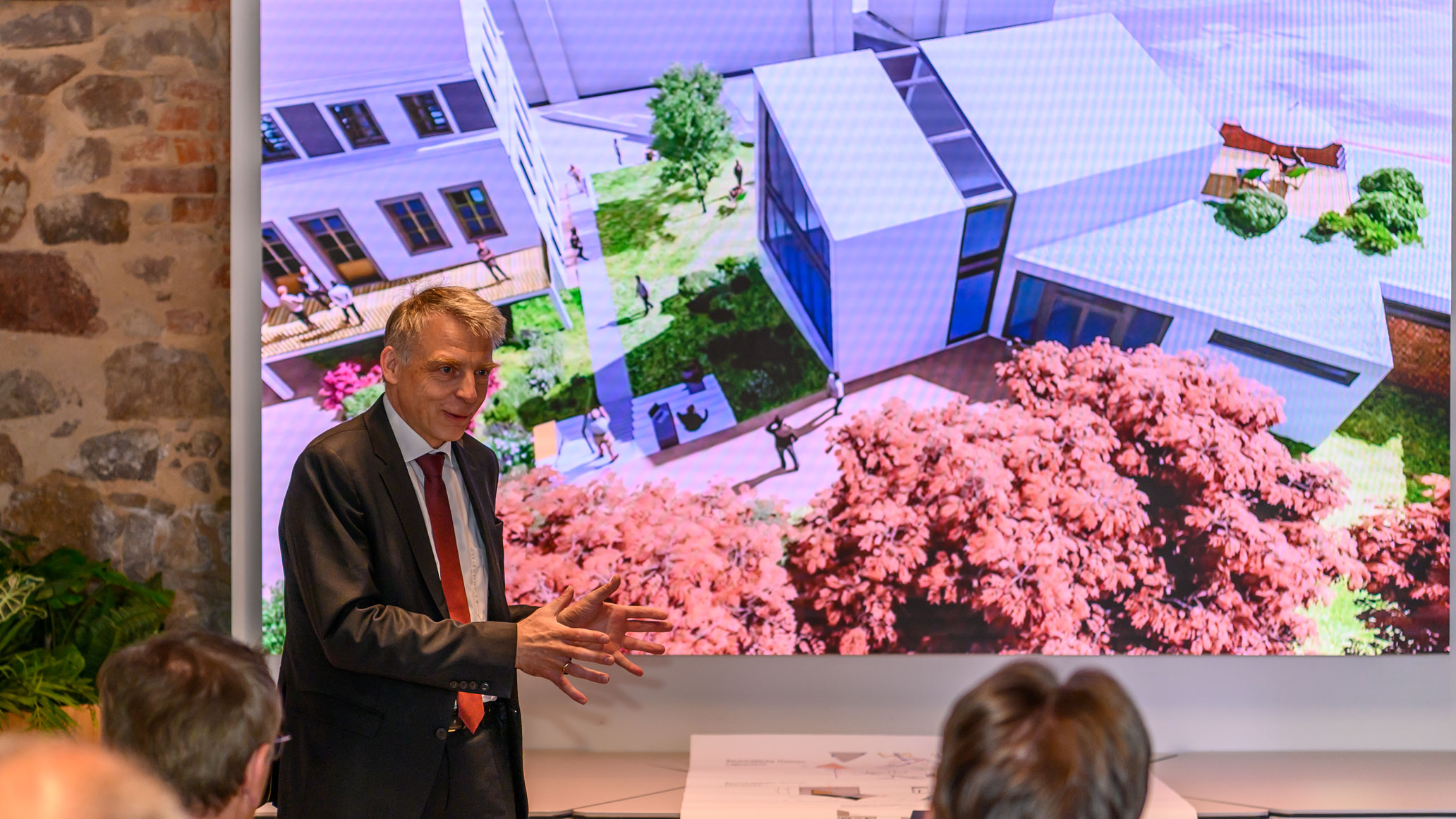
Project leader and Principal Professor Volker Tolkmitt is delighted: “With the construction of the timber shell now underway, and with plenty of space for solar panels, it is becoming clear what something special is taking shape here: a building that is holistically and sustainably dedicated to people and the environment. How we shape working and living conditions in rural areas in future, whilst meeting the demands for sustainability and the availability of secure digital technologies, are fundamental questions for the future of our region. With Telewerk, we aim to provide answers that we develop locally and test on an ongoing basis. And I warmly invite you to experiment alongside us.”
With Telewerk, the ‘Werkbank32’ site at Bahnhofstraße 32 in Mittweida is set to become part of the university campus. As an experimental platform, Telewerk not only offers flexible space for new forms of work, but also for research and education at Mittweida University of Applied Sciences that is consistently practice-oriented in key fields: ranging from the cyber security of digital infrastructures, Internet of Things (IoT) connectivity in building and plant engineering, and renewable energy supply, to social science issues relating to telework and sustainable lifestyles in rural areas.
Professor Matthias Klingner, Director of Fraunhofer IVI, emphasises the project’s purpose beyond its purely functional aspect: “Building in a resource-efficient manner and operating buildings sustainably is a challenging technical issue. People will only embrace these innovations wholeheartedly once we succeed in combining simplicity and practicality with an aesthetically pleasing design. Telewerk may well serve as a striking example of this.”
Sustainable construction
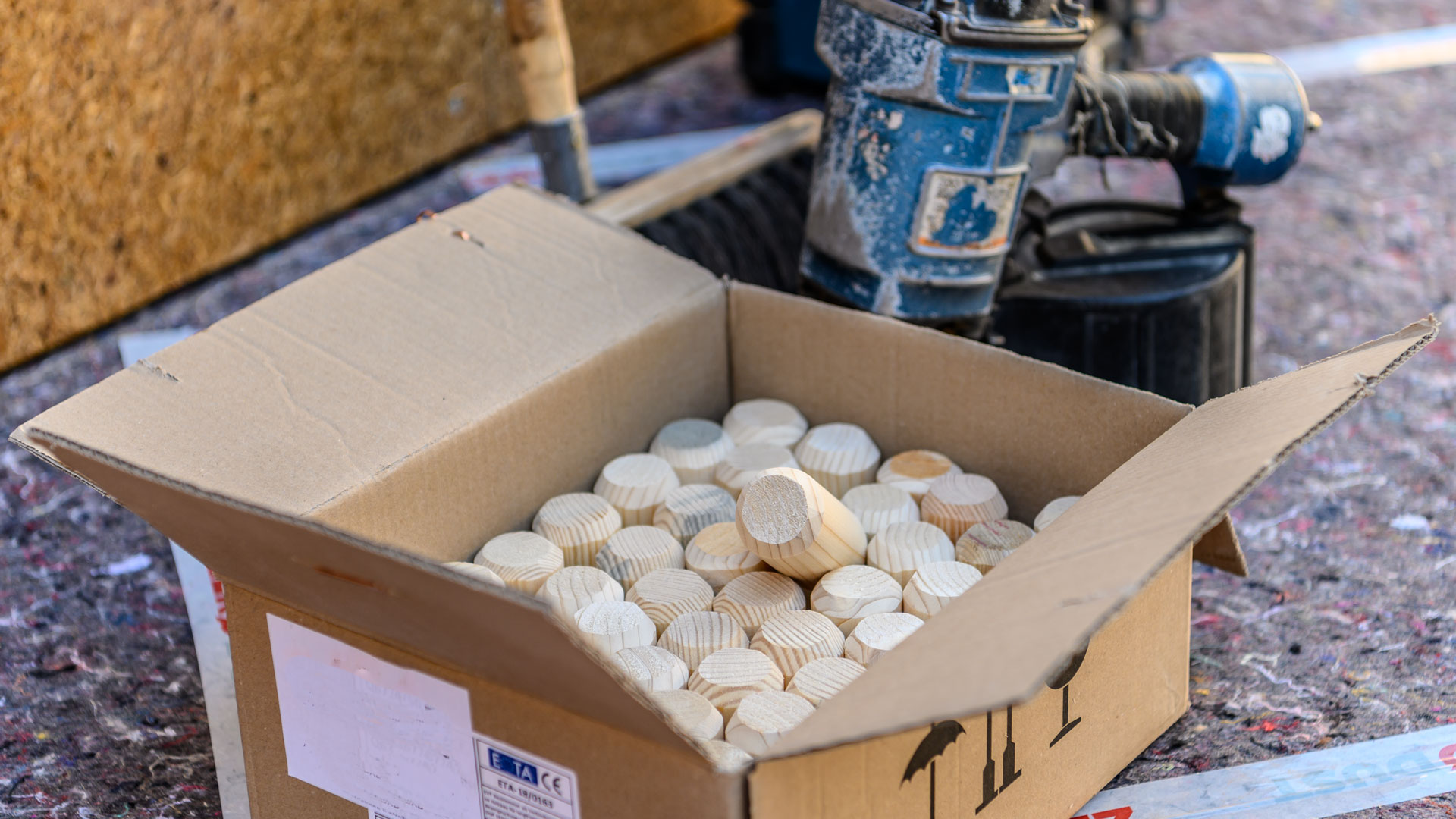
Telewerk stands on a foundation with a concrete core temperature control system, which allows thermal energy to be stored for cooling or heating the building. The materials and design of the building’s visible parts also meet the requirement for a minimal carbon footprint: wood is a renewable raw material which, unlike concrete, sequesters carbon. Timber construction is also better suited to creating surfaces that make optimal use of sunlight.
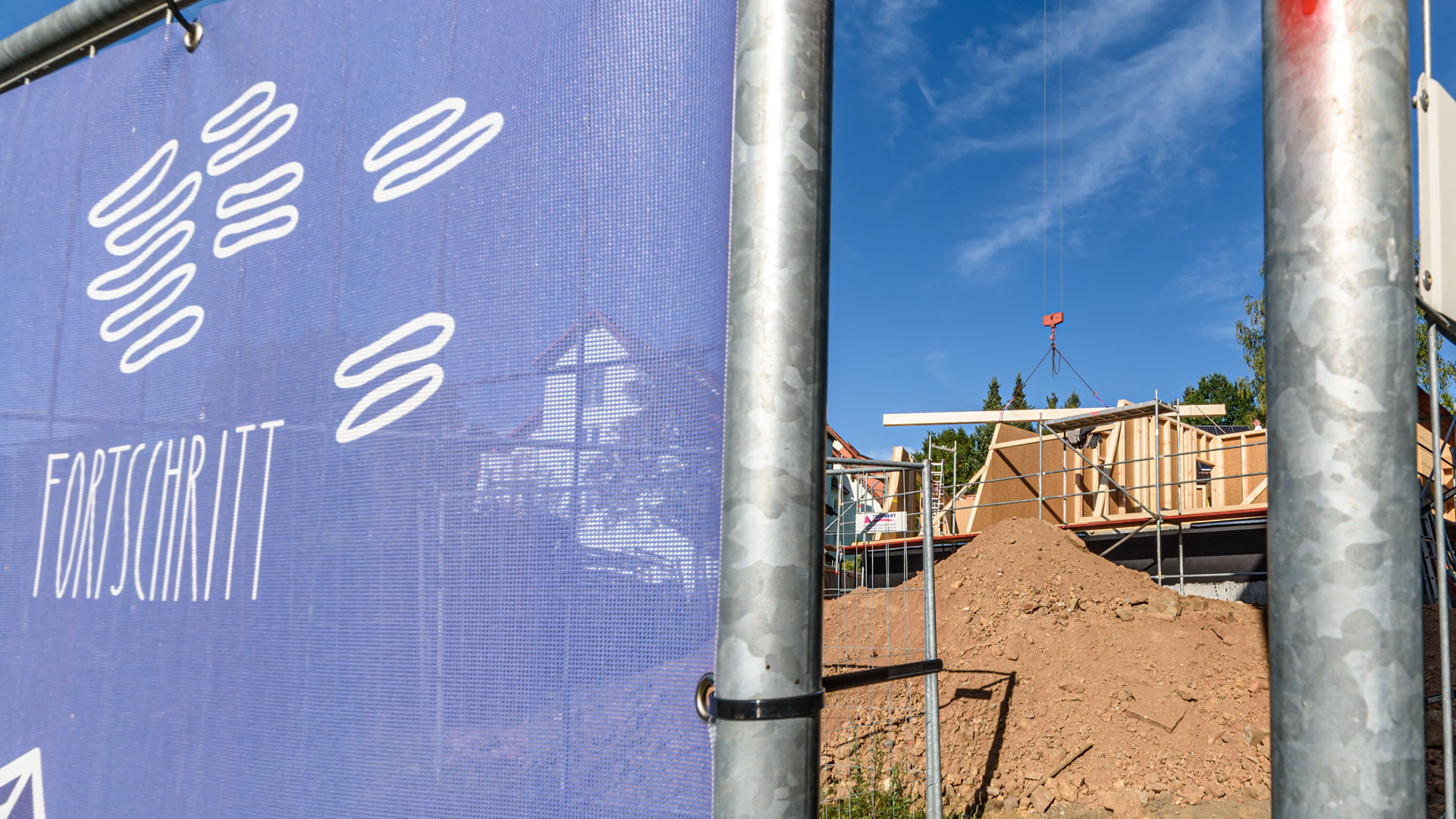
In addition to solar energy, optimised load management and decentralised energy storage systems help to ensure that Telewerk is also forward-looking in terms of energy. Optimised load management ensures more even energy consumption by, for example, optimally scheduling energy-intensive but time-flexible processes such as 3D Printing. Energy storage systems enhance the security of supply for heating, cooling and water treatment within the building and can even feed renewable electricity into the grid to help maintain its stability.
Don’t miss out
As timber construction allows the building to take shape much more quickly than conventional construction using concrete and masonry, Telewerk will soon be celebrating its topping-out ceremony.
On 7 December, the SMR, Mittweida University of Applied Sciences and their partners will present Telewerk’s future potential to the public for the first time, on site.