

This page was translated automatically using artificial intelligence (DeepL). The German version is binding. More information about automatic translation
News Intranet
This page was translated automatically using artificial intelligence (DeepL). The German version is binding. More information about automatic translation
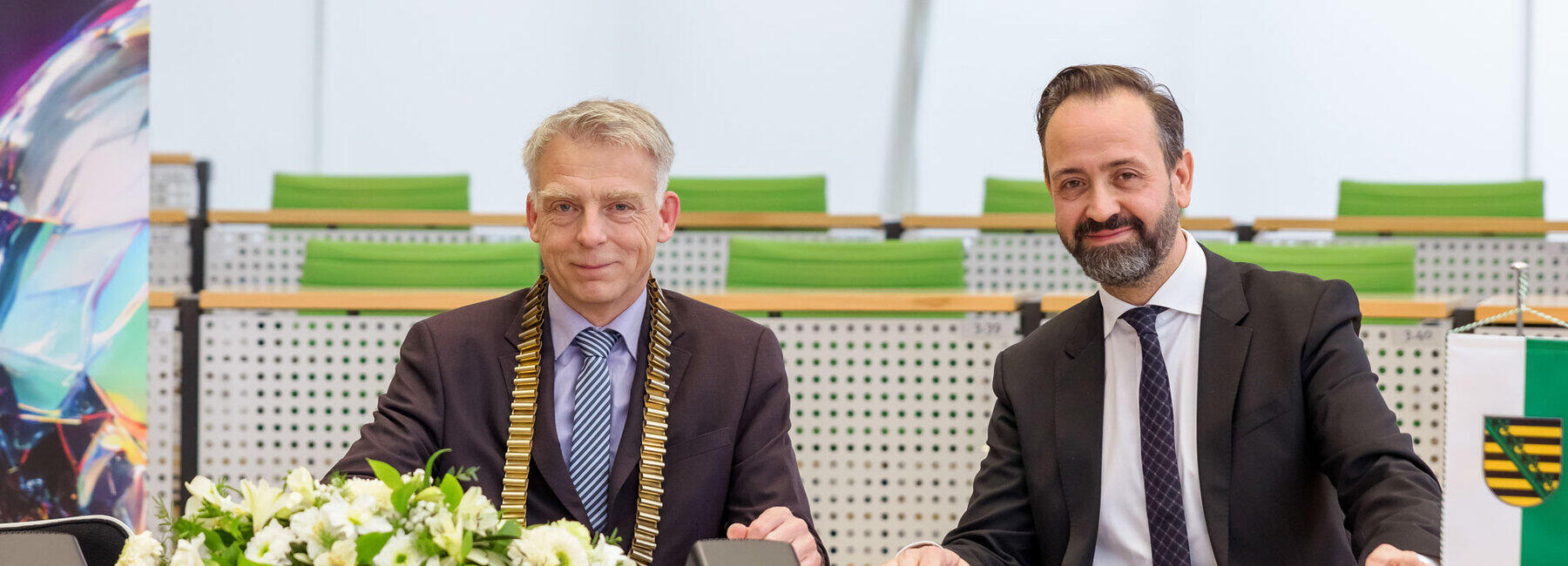
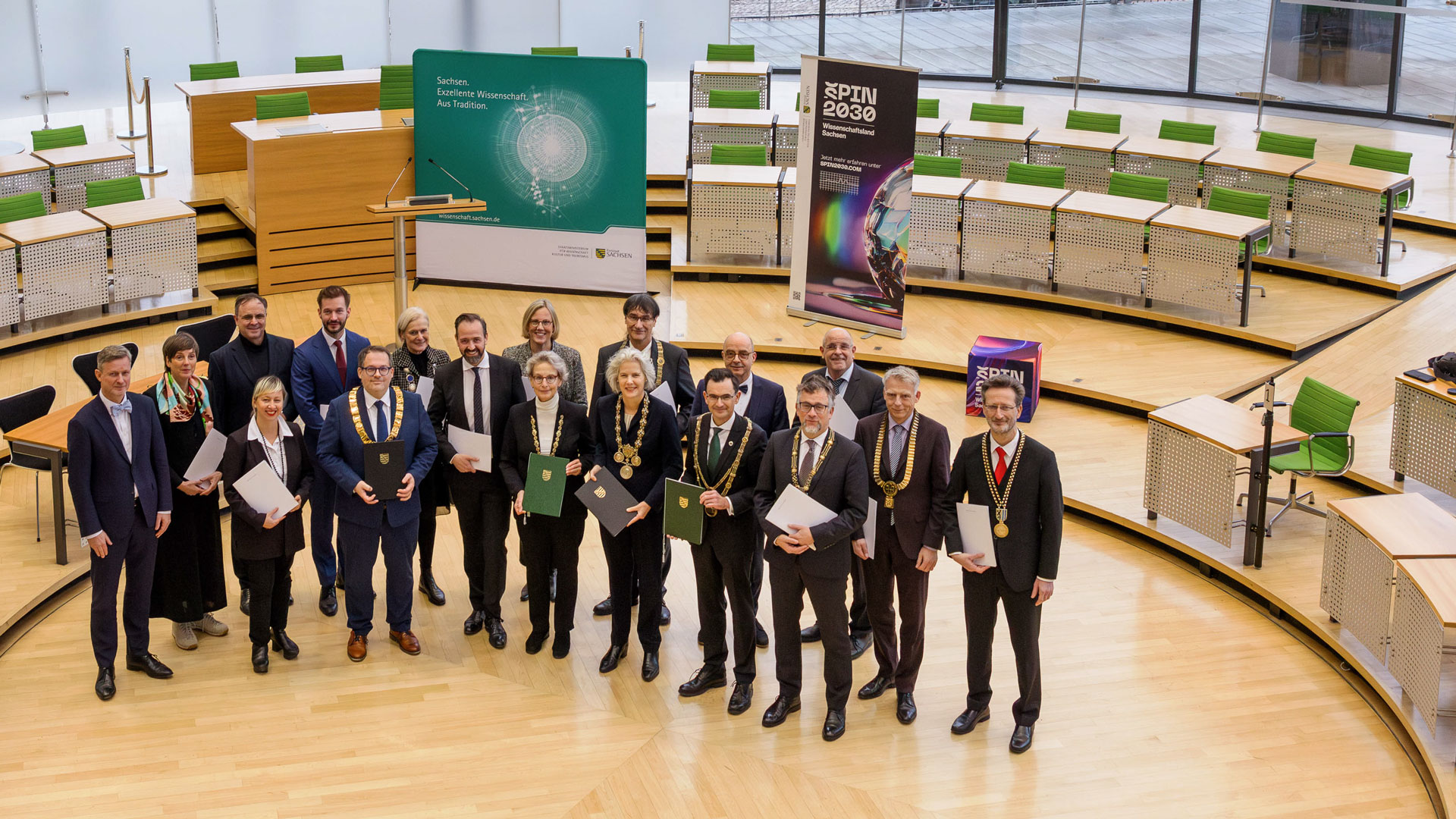
On 11 December, two signatures formalised the agreement between Mittweida University of Applied Sciences and the Free State of Saxony setting out the university’s objectives up to 2028. The ceremony in the plenary chamber of the Saxon State Parliament, attended by all fourteen state universities and the two medical faculties in Leipzig and Dresden, was preceded by months of tough negotiations.
In May of this year, the grant agreements with the Free State had provided Saxony’s universities with planning certainty for their core funding until 2032. Given the uncertain budgetary situation at both state and federal level, this long-term funding commitment – unique in Germany – provides a reliable basis for action.
By contrast, the individual target agreements now signed have a shorter term, running until the end of 2028, and stipulate that a portion of future budgetary funds will be conditional upon the fulfilment of the agreed targets. This is now the fourth such agreement since 2014. Mittweida University of Applied Sciences is the only university in Saxony to have achieved the targets set out in the first two agreements. The final accounts for the third period, which is now coming to an end, are still pending.
All targets have been met in the past
Rector Volker Tolkmitt is confident that Mittweida University of Applied Sciences and its members will continue this success story. Yet it was precisely this success that did not make the negotiations any easier. Tolkmitt: “It may be in the nature of things to treat past successes, achieved through great effort, as minimum requirements for the future. I am inclined to call this the ‘curse of success’. However, during the negotiations, it was the university management’s task, on the one hand, to make it clear that exceptional achievements are recognised as such, and, on the other hand, to maintain a sense of proportion when setting ambitious targets. The target agreement had to take into account the available resources and the capacity of those responsible for these successes. We have succeeded in doing so.”
Specific targets and ambitious key performance indicators remain in place: for example, the total number of students is to remain virtually constant at 6,100; external funding from business partnerships is to amount to 1.05 million euros per year; and 24 spin-offs are to be established. These are figures that the university has already achieved or exceeded in the past. Other key performance indicators include, for example, the level of participation by teaching staff in continuing professional development in higher education pedagogy. An increase in the proportion of international students has also been agreed.
The Rectorate of Mittweida University of Applied Sciences had conducted the negotiations with the Ministry of Science in close consultation with its governing bodies. Tolkmitt said: “If, as before, everyone in the university community plays their part, we will also fulfil the new target agreement.”
The budget for the performance targets amounts to 200 million euros for all higher education institutions, an increase of 20 million compared with the previous period.