

This page was translated automatically using artificial intelligence (DeepL). The German version is binding. More information about automatic translation
News Intranet
This page was translated automatically using artificial intelligence (DeepL). The German version is binding. More information about automatic translation
Mittweida University of Applied Sciences has been a founding partner of the European University Alliance for Responsible Consumption and Production – EURECA-PRO – since 2020. The European Commission has just confirmed the second phase of the project, and the alliance of nine universities across eight countries is well on its way to becoming an integrated European campus with the aim of jointly conducting research and teaching on responsible consumption and production.
This concept is already being put into practice today, bringing together students and researchers across national borders – for example, through the STEM Innovation Contest. STEM stands for Science, Technology, Engineering and Mathematics, which is analogous to the German MINT. In the EURECA-PRO STEM Innovation Contest, teams of students compete against one another and develop solutions to real-world challenges. They are supported in this by mentors from the academic and business worlds.
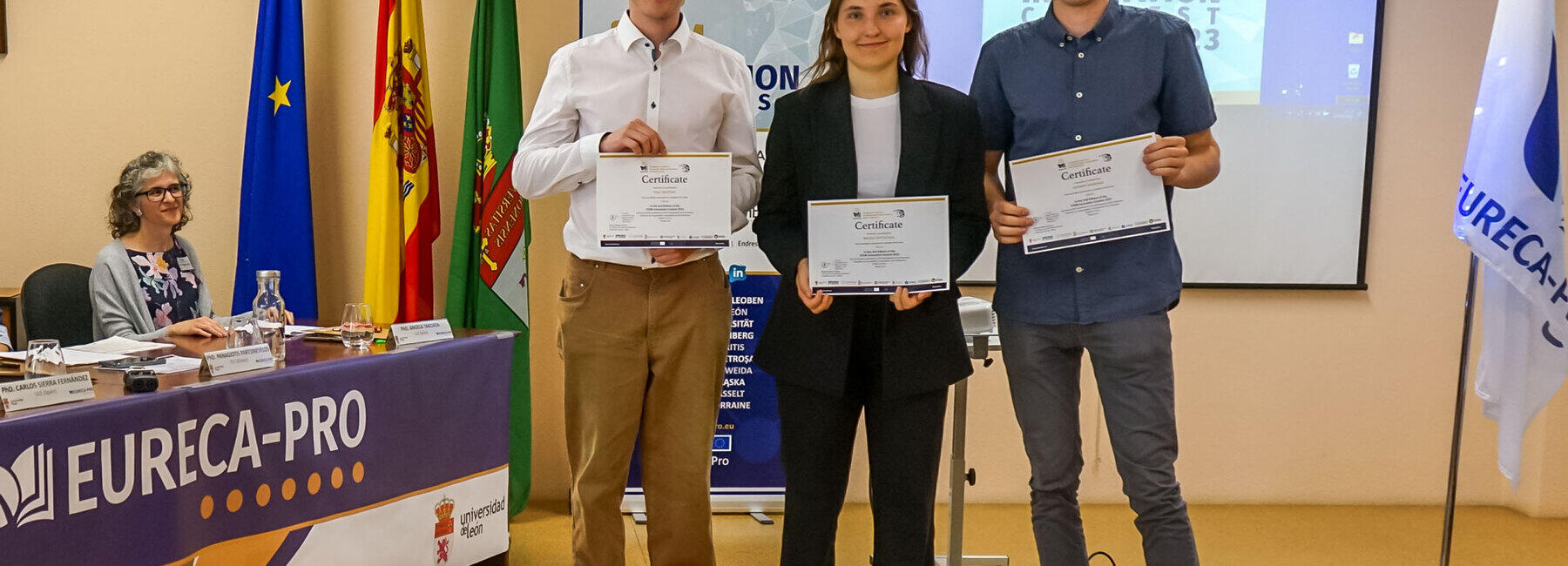
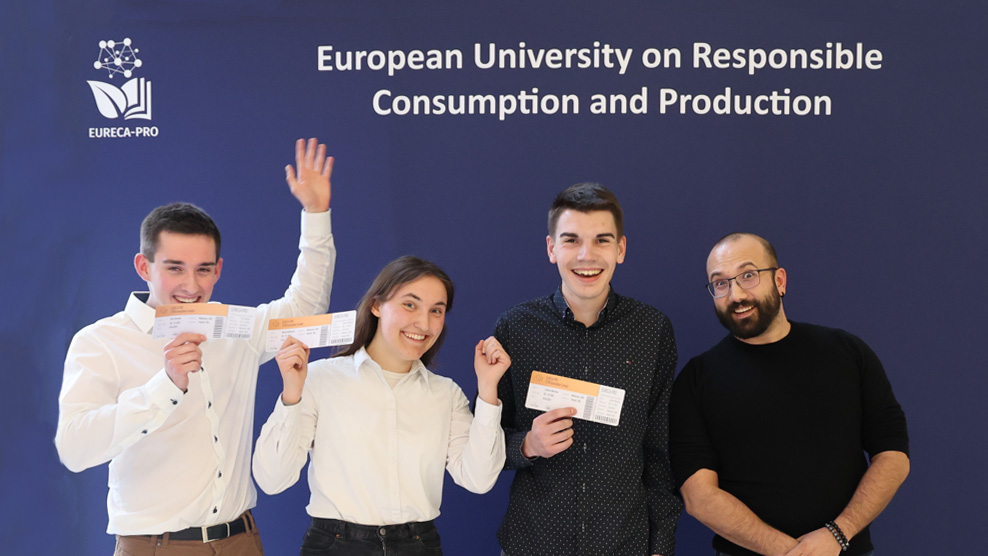
The Mittweida team MWC22, comprising Paul Reuther (Bachelor’s degree in Applied Computer Science/IT security), Nicole Gottschall (Applied Computer Science/Software Development), Johann Weinmar and Zekeriya Demirci (both on the Master’s programme in Mechanical Engineering) had qualified for the final in León, Spain, from 4 to 8 July via a preliminary round. There, they competed against teams from Poland, Romania and Spain.
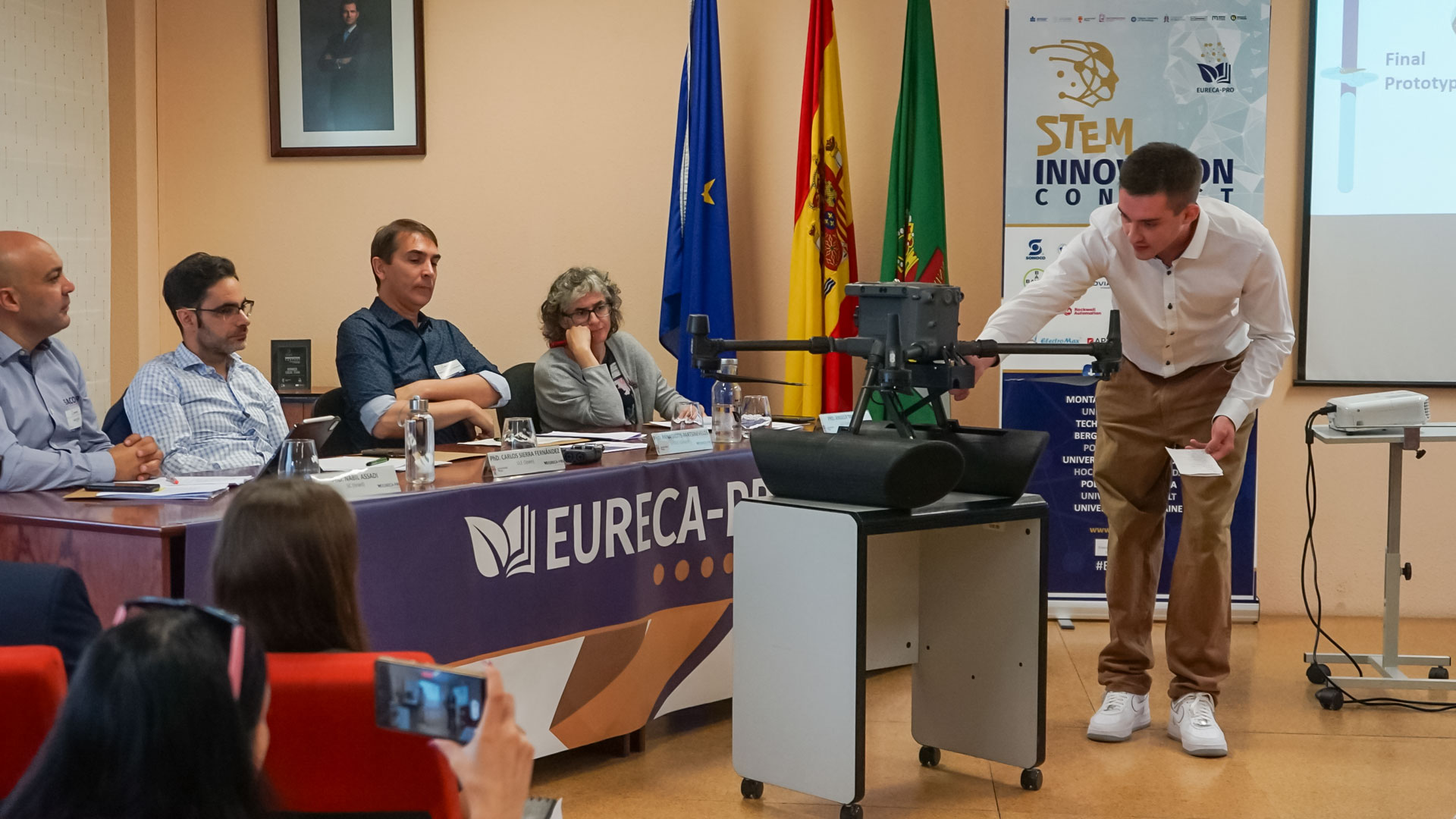
Determining water quality from the air
Their project, “A drone equipped with suitable sensor technology to monitor the water quality of surface waters so that hazards can be detected in good time”, came second.
Background to the challenge: Due to industrial and environmental factors, as well as ongoing climate change, it is becoming increasingly important to determine and monitor the water quality of surface waters. The advantage of a drone with suitable sensor technology on board over an autonomous watercraft is obvious – or rather, it’s right up in the air: it can travel autonomously over land to reach another body of water or river branch.
Nicole Gottschall is delighted, along with her team: “Even though carrying out the project was the most important thing for us, we are of course proud of our placing and the recognition the project has received from the jury. Through the competition, we were not only able to demonstrate our ability to work as a team, but also had the chance to connect with students from across Europe and gain knowledge beyond our own disciplines.”
The team received support from Germany in the form of Professor Falk Langer from Mittweida and the team at the Faculty of Engineering Sciences’ InnoLab. Support from the business sector came from Roland Zilly, Stefan Pilz and Erik Hennings at the Waldheim site of the Endress+Hauser Group, a leading global supplier of measuring instruments. The experts attest that the Mittweida students’ project has enormous potential for further development.
Incidentally, the final of the first EURECA-PRO STEM Innovation Contest took place in July 2022 at Mittweida University of Applied Sciences.