

This page was translated automatically using artificial intelligence (DeepL). The German version is binding. More information about automatic translation
News Intranet
This page was translated automatically using artificial intelligence (DeepL). The German version is binding. More information about automatic translation

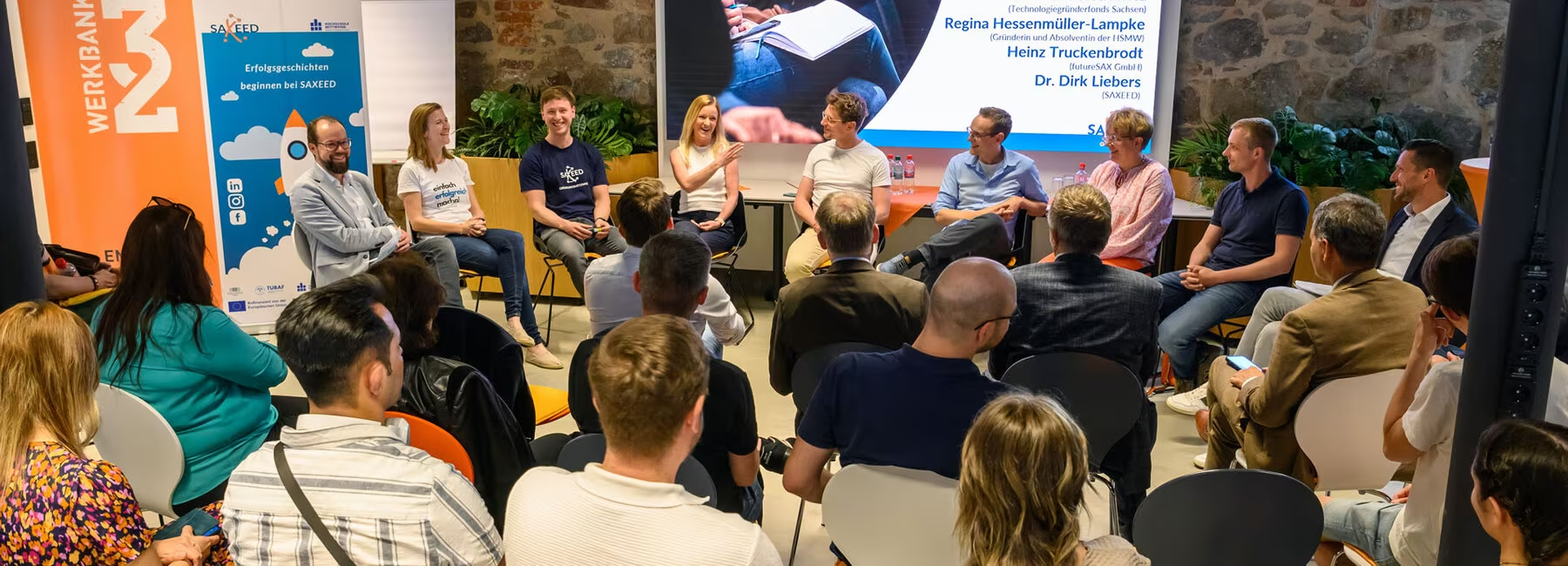
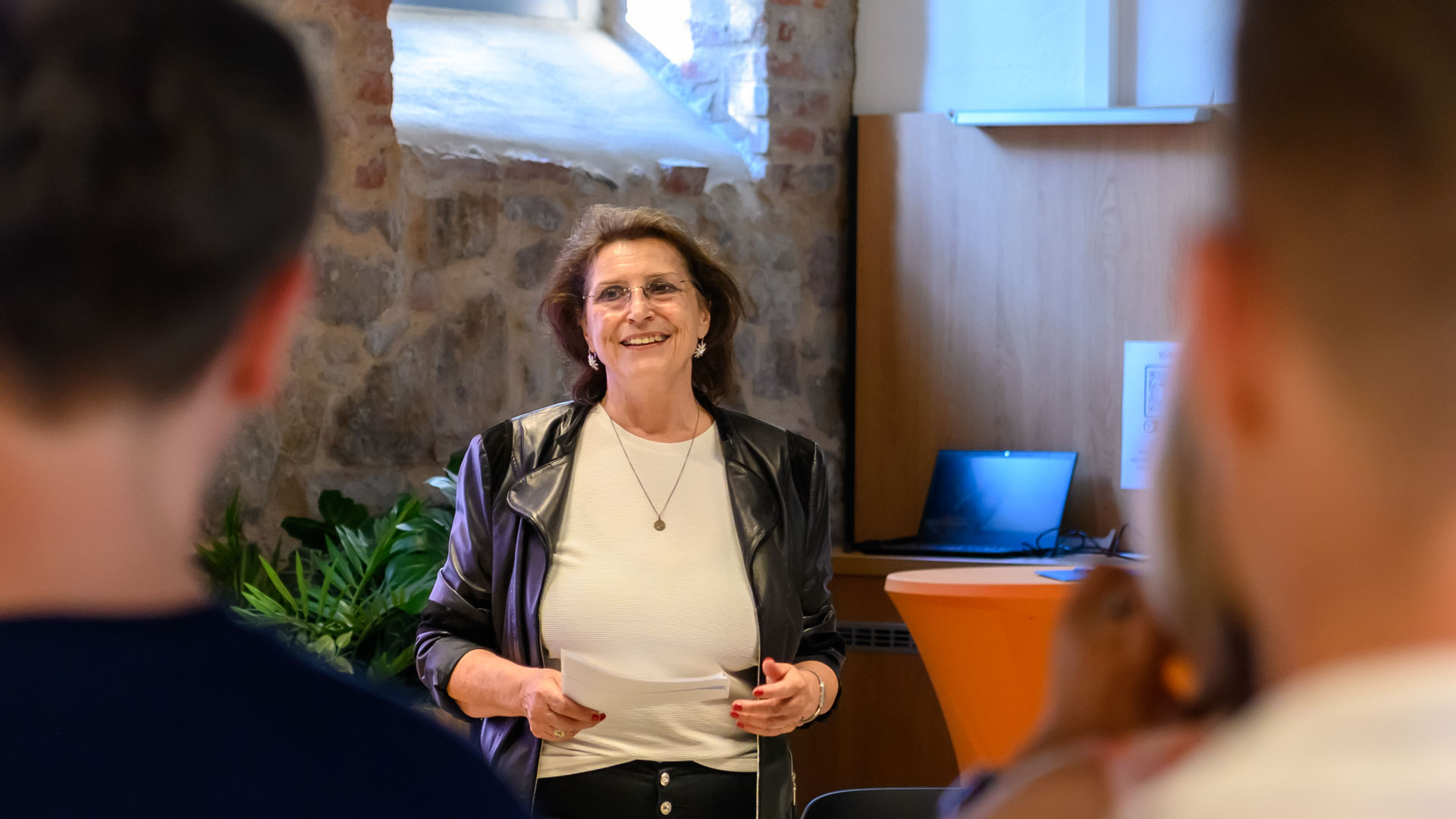
“Tradition is not a strategy,” as they say in innovation management. The SAXEED start-up network of Saxon universities is undergoing change at its Mittweida site: on 25 June, the network hosted the first ‘Mittweida Start-up Forum’, an event that brought together future, current and former start-up founders. Also new since the start of the summer term are the project leaders in Mittweida: Professor Alexander Knauer from the Faculty Applied Computer Sciences and Biosciences and Professor Ulrich Buser from the Faculty Media Sciences. They represent the two largest faculties at Mittweida University of Applied Sciences and embody SAXEED’s interdisciplinary focus, ranging from STEM to the social sciences. Together with site manager Dr Dirk Liebers, the professors form the core team of SAXEED in Mittweida.
The three organisers welcomed over sixty participants to their first start-up forum. From now on, the regular venue for this meeting – held once a term – for start-up founders and those interested in starting a business at Mittweida University of Applied Sciences is the ‘Werkbank32’ Innovation and Start-up Centre run by Teleskopeffekt GmbH. Now part of the university campus, this venue is ideally situated in two respects: for ideas and start-up initiatives from the university, and for exchange and networking with experts on all aspects of starting a business. The venue is also available for other new event formats organised by SAXEED Mittweida, such as ‘Idea & Beer’.
From start-up to exit
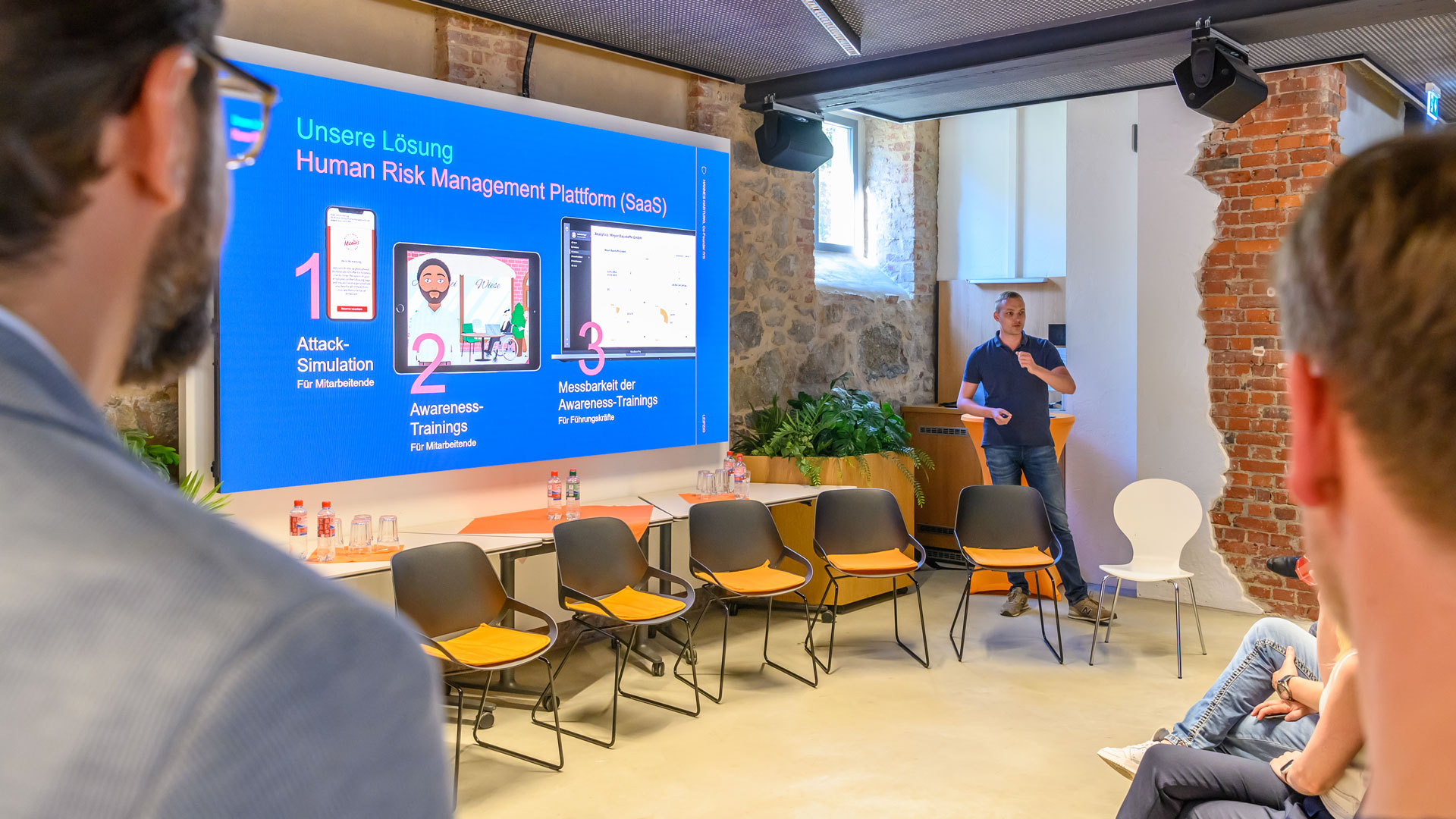
Because young founders benefit from the successes and failures of more experienced founders, the latter share their experiences and talk about their entrepreneurial journeys at the Start-up Forum. However, keynote speaker Hannes Hartung could hardly be described as truly ‘older’.
The Mittweida graduate of the General and Digital Forensic Science degree programme founded ‘Increase Your Skills GmbH’ after completing his studies and was so successful that he was able to sell his company to an international market leader before he even turned 30. Hartung’s business idea: 95 per cent of all cybersecurity incidents are attributable to human error. Targeted training programmes and cyber-attack simulations help companies to close their security gaps and strengthen their IT infrastructure.
Good advice given – experts sharing ideas
The same applies to Hannes Hartung: start-ups are generally not solitary, self-sustaining ‘garage ventures’; rather, they need a strong network, the right support and, of course, funding. What is possible in (Central) Saxony was the subject of the panel discussion following the keynote speech, featuring Hannes Hartung, Dr Liebers and other experts: Regina Hessenmüller-Lampke, CFO and co-founder of CMMC GmbH and a graduate of Mittweida University of Applied Sciences; Anja Wohlgethan from the Sächsische Aufbaubank (SAB); Marion Mattern from Teleskopeffekt GmbH in Mittweida, Christian Mordowicz from the Saxony Technology Start-up Fund (TGFS) and Heinz Truckenbrodt from futureSAX, the Free State of Saxony’s innovation platform. They drew the audience’s attention to the many opportunities available for securing funding, knowledge and support for their own start-ups.
Start-up award winners: Be bold, get off to a focused start, learn from your mistakes
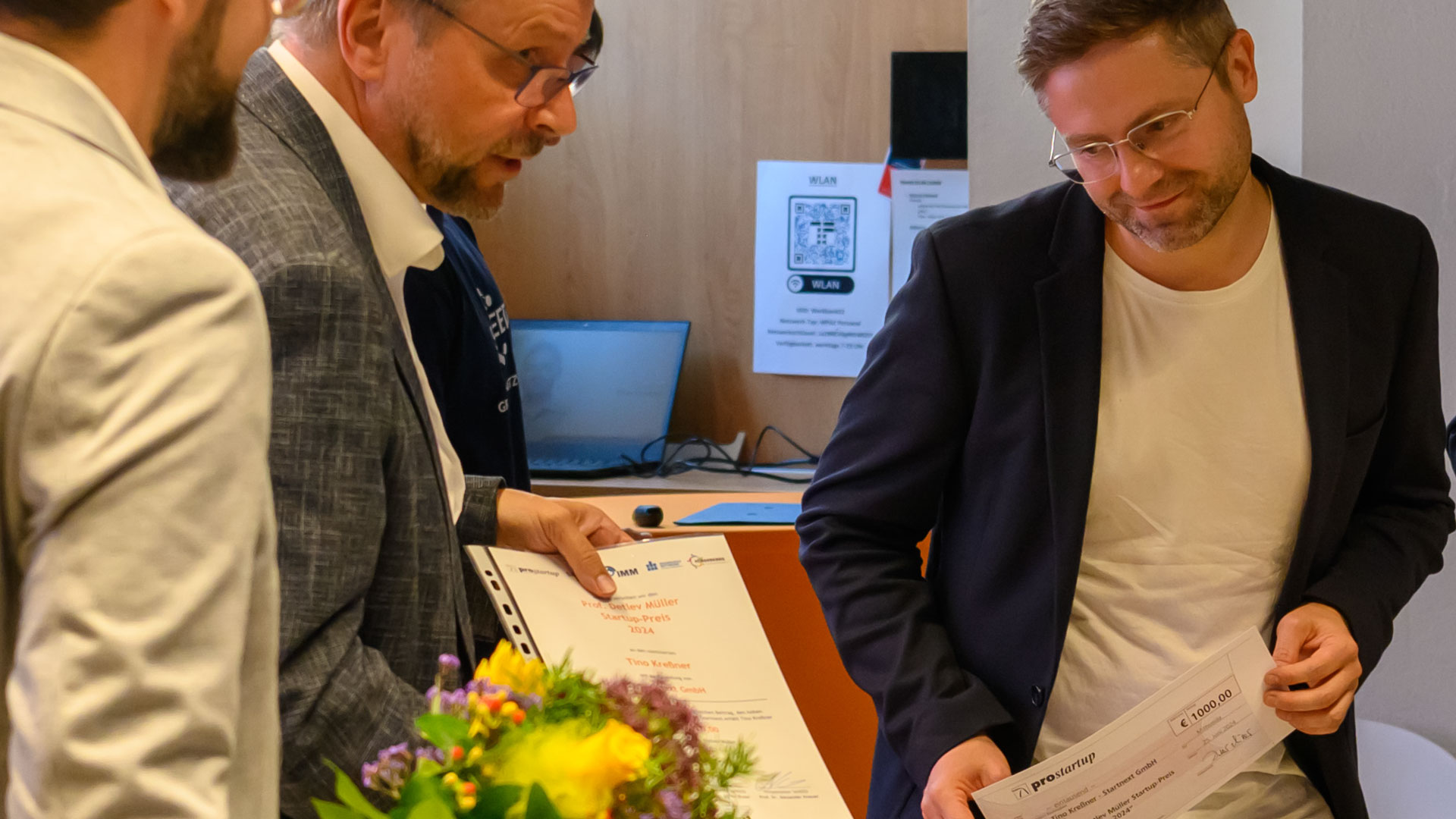
The highlight of the evening was the presentation of the ‘Prof. Detlev Müller Start-up Prize’. The founder awards the prize once a year to successful start-up founders from Mittweida University of Applied Sciences – this year marking the seventh time the prize has been awarded. Müller is himself a successful entrepreneur; he set up his own engineering firm in 1991, which is now known as IMM electronics GmbH. He passes on his knowledge as an honorary professor at the university.
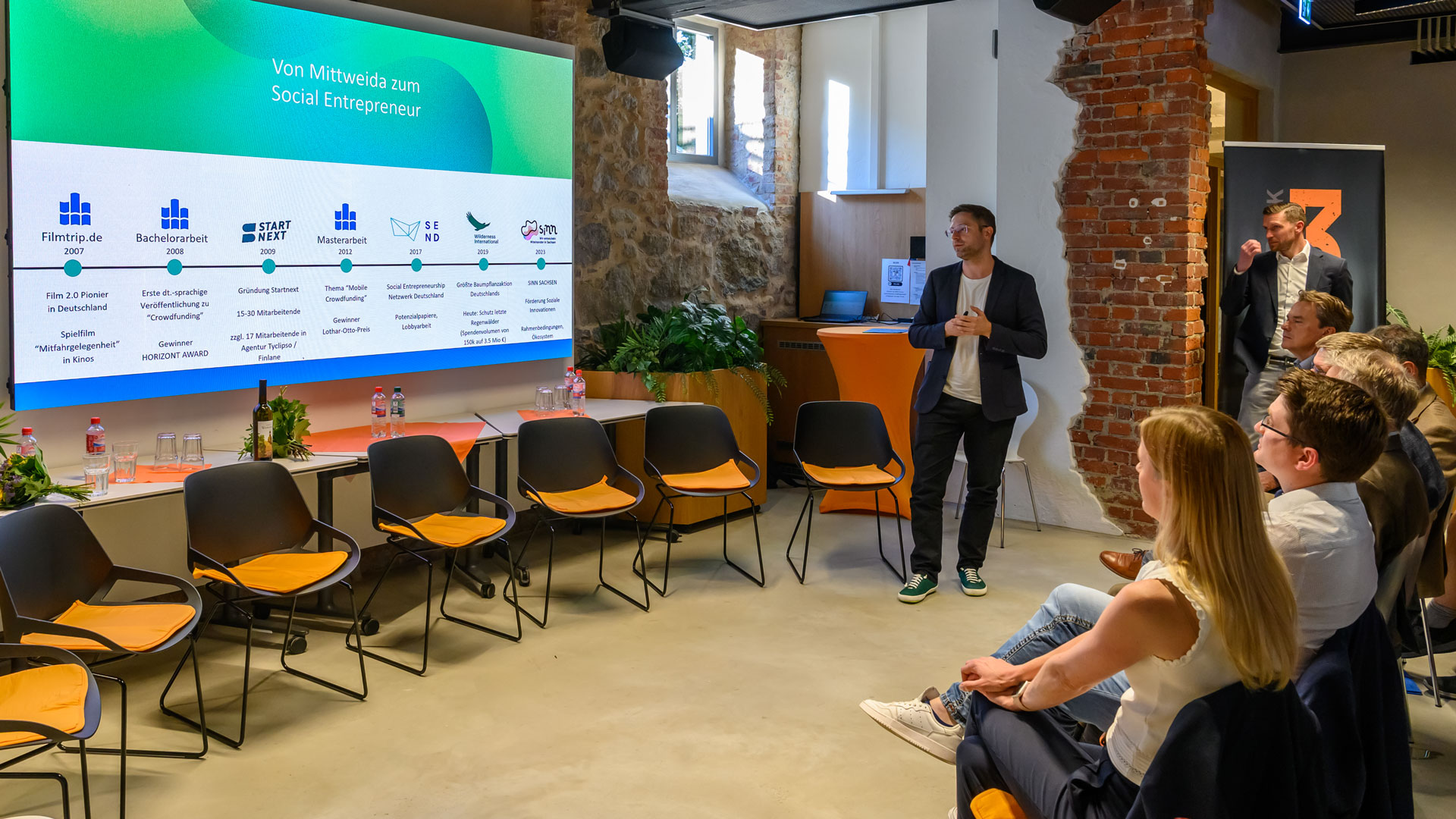
This year’s award winner also benefited from this during his studies: Tino Kreßner’s Master’s degree from the Faculty Media Sciences in 2012 and the founding of his company in 2009 were some years ago, but with the crowdfunding platform Startnext, which he launched with a partner, he has since raised €275,000,000 in funding and successfully financed 32,000 projects. Five further platforms have since been established, including SINN – the future-oriented platform for social innovation in Saxony.
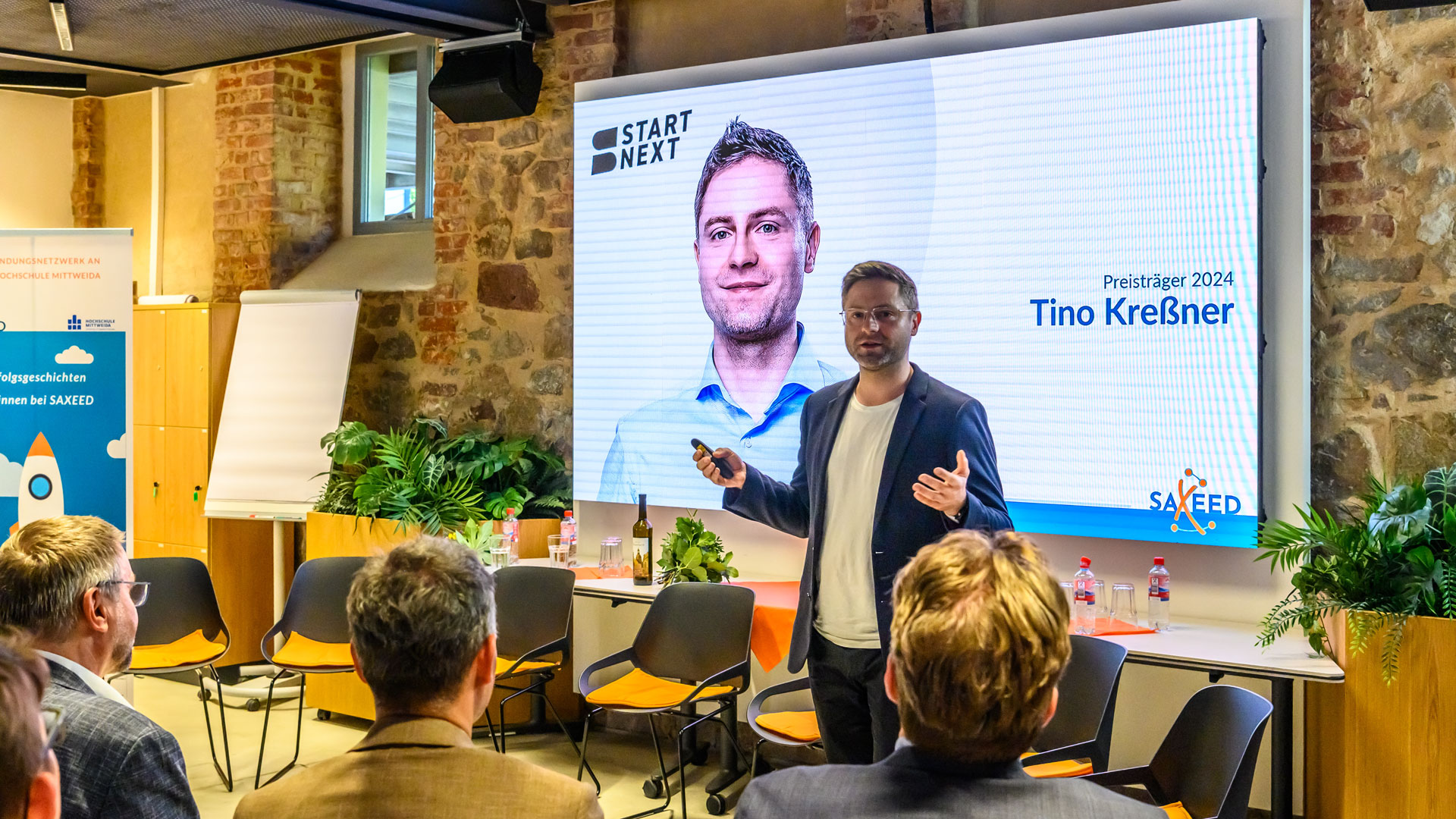
Professor Alexander Knauer says of the award winner: “Tino Kreßner has significantly transformed the landscape of community engagement and creative financing. In a world where innovative ideas and visionary projects often falter at the limits of traditional funding channels, his idea has opened doors and built bridges.” Professor Ulrich Buser adds: “This year’s award winner is a true social innovator thanks to his tireless commitment and clear vision of promoting sustainable and creative ideas through participatory and transparent capital allocation.”

Significant successes in the EXIST federal programme
The Mittweida SAXEED team has been supporting and advising prospective entrepreneurs and start-ups at Mittweida University of Applied Sciences for 22 years. The latest addition is the ‘Carry Home’ start-up team, which has successfully applied for the prestigious EXIST start-up grant from the BMWK. Tom Prennig, Justus Behr and Alisa Sparish are addressing the security concerns of modern digital households and businesses regarding cloud applications with their innovative solution: data is stored locally and processed directly on-site using AI. This allows smart home applications to be integrated without any data protection concerns.
Since May, the team has been able to further develop their start-up for a year with the EXIST start-up grant. Dr Liebers describes how it all came about: “The three of them first presented their idea and the technical possibilities for controlling data within their own smart home network in Professor Knauer’s ‘Entrepreneurship & Digital Innovation Management’ module as part of the Blockchain Master’s programme. We were quickly convinced by the team’s concept and developed the application together. For me, this is a fine example of interdisciplinary collaboration at Mittweida.”

Mittweida University of Applied Sciences and its local partner, Teleskopeffekt GmbH, have achieved yet another success in the federal EXIST programme: In the federal government’s ‘Startup Factories’ flagship competition, ‘Startup Factory Saxony’ – a project in collaboration with seven other Saxon universities and companies – has reached the final round and will receive funding for the next nine months of the concept phase.
The German government’s flagship competition aims to significantly increase the number and quality of knowledge-based spin-offs. ‘Startup Factory Saxony’ intends to achieve this by reaching out to target groups beyond start-up teams from universities and supporting them beyond the growth phase. The aim is to establish Saxony as a flagship for start-ups in the deep tech sector and make it more attractive to international entrepreneurs. Rector Volker Tolkmitt is delighted that the university is part of the project and is contributing the Mittweida start-up ecosystem: “This broad alliance makes it possible to involve different regions in Saxony with very diverse economic structures, thereby strengthening the Free State as a whole.”
Photos: Helmut Hammer (1–7, 9–10), SAXEED Mittweida (8)