

This page was translated automatically using artificial intelligence (DeepL). The German version is binding. More information about automatic translation
News Intranet
This page was translated automatically using artificial intelligence (DeepL). The German version is binding. More information about automatic translation
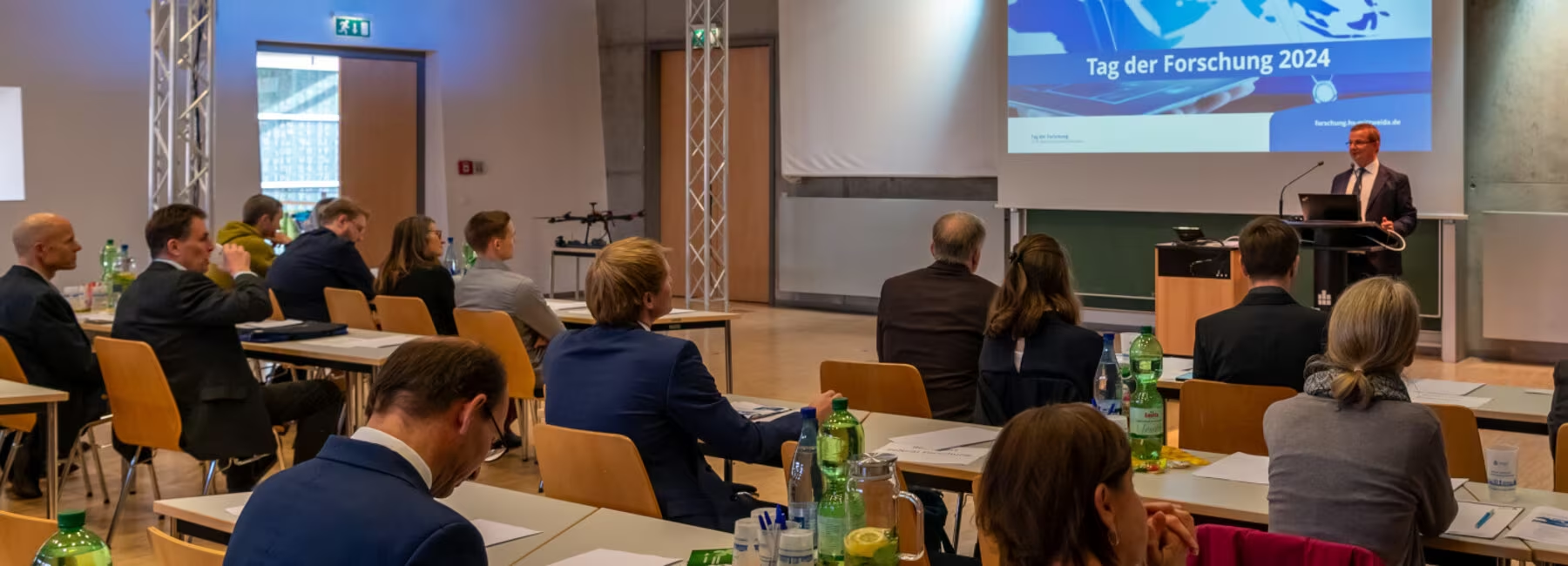
SaxFDM, VIVO, FIS – these abbreviations all relate to research data and research information, but they are not the same thing. Last Wednesday’s Research Day at Studio B shed light on the world of abbreviations and terminology surrounding research data management.
The Vice-Chancellor for Research, Professor Uwe Mahn, together with the Vice-Chancellor, Professor Volker Tolkmitt, welcomed all those present and presented the upcoming 2025 research year under the theme ‘Future Energies’, as well as the events and technology transfer fairs planned by and at the university.
As is traditional, the Gerhard Neumann Prize was awarded by the Faculty of Engineering Sciences on Research Day; a detailed report can be found at www.forschung.hs-mittweida.de/news/aktuell/8462/.
In another long-standing tradition, the nominees for Mittweida University of Applied Sciences’ 2024 Science Prize presented their work to the public for judgement; further information can be found at www.forschung.hs-mittweida.de/news/aktuell/8465/
The following two presentations focused on the research data generated in the course of research projects, as well as data on research activities – known as research information – both of which need to be well managed and can enhance the visibility of research.
Johannes Sperling and Alina Bastian from SaxFDM (Saxony’s State Initiative on Research Data Management) gave an introduction to research data management (RDM). The presentation highlighted the key aspects of successful RDM implementation, based on Mittweida University of Applied Sciences’ regulations on ensuring good scientific practice and the DFG’s RDM checklist: ranging from data description, through documentation and technical safeguarding, to legal issues, the archiving and provision of access to research data, and responsibilities and resources. It became clear that good data management not only meets the requirements of research funding bodies but also contributes to greater efficiency and improved visibility of one’s own research. The discussion focused on the challenges in the field of engineering, for example when proprietary software ceases to function after a few years. The wide range of support services offered by SaxFDM was then presented: in addition to consultancy and training sessions, which can be booked via an appointment booking tool on saxfdm.de or by email, the Saxon state initiative also offers technical services. Both a data management planning tool (SaxFDM-RDMO), which can be used to create data management plans (DMPs) required for FDM sections in project applications or project reporting, and a service for archiving and data publication (OpARA) are set to be available to members of Mittweida University of Applied Sciences from next year. The initiative currently connects 27 member organisations across 11 locations and is establishing itself as the central point of contact for FDM-related enquiries in Saxony.
Maria Rein from the Research Department presented Mittweida University of Applied Sciences’ research information system (FIS), known as VIVO, which makes a significant contribution to the transparency and visibility of academic achievements at Mittweida University of Applied Sciences. Particular emphasis was placed on the importance of maintaining a well-updated VIVO profile, which effectively supports researchers’ international networking and visibility. An outlook on the further development of VIVO offered exciting prospects for the research information system at Mittweida University of Applied Sciences:
- Upgrade to the new version of VIVO
- Multilingual user interface to cater for an international user base
- Enhanced search and filter functions for even more targeted searches
- Integration with the Saxon research data archive and repository OpARA to simplify the cataloguing of published research data
- Support for the university library in publication management to optimise data maintenance and updating
During the subsequent discussion, the importance of the ORCID ID (Open Researcher and Contributor ID) for researchers and lecturers was emphasised. Furthermore, the desire was expressed to be able to use VIVO data in other systems in future, such as on personal websites. These suggestions were very well received and will be implemented in the near future by the Research Service. With these innovations, Mittweida University of Applied Sciences is strengthening its digital research infrastructure and further expanding its international reach and competitiveness.
Further information:
Link to SaxFDM: https://saxfdm.de/
Link to VIVO: vivo.hs-mittweida.de/vivo/
Text: Johannes Sperling, Alina Bastian, Maria Rein, Annett Kober
Images: Helmut Hammer