

This page was translated automatically using artificial intelligence (DeepL). The German version is binding. More information about automatic translation
News Intranet
This page was translated automatically using artificial intelligence (DeepL). The German version is binding. More information about automatic translation
A key focus at Mittweida University of Applied Sciences has always been on practical teaching and training. To further enhance this practical focus, the teaching staff are committed to the ongoing development of course content and the modernisation of laboratory equipment and facilities. As part of the new KEP module (Cooperative Development Project), a group of students on the Bachelor’s degree programme in Mechanical Engineering is currently putting into practice the idea of building and commissioning a laboratory-scale hot-dip galvanising plant.
Hot-dip galvanising is a coating process in which components are immersed directly in molten zinc (450°C). This process is preceded by degreasing, pickling, rinsing and flux baths. Typical components include crash barriers, posts and grating. This coating process is currently being partially automated by a group of students as part of the so-called KEP module within the Mechanical Engineering degree programme. The KEP (cooperative development project) is a standalone module within the Bachelor’s degree in Mechanical Engineering (semesters 4 and 5), which gives students the opportunity to independently carry out the entire course of a project. The objectives are to develop engineering, project management and interpersonal skills, as well as interdisciplinary thinking. Small groups are formed to carry out the project under the supervision of a professor.
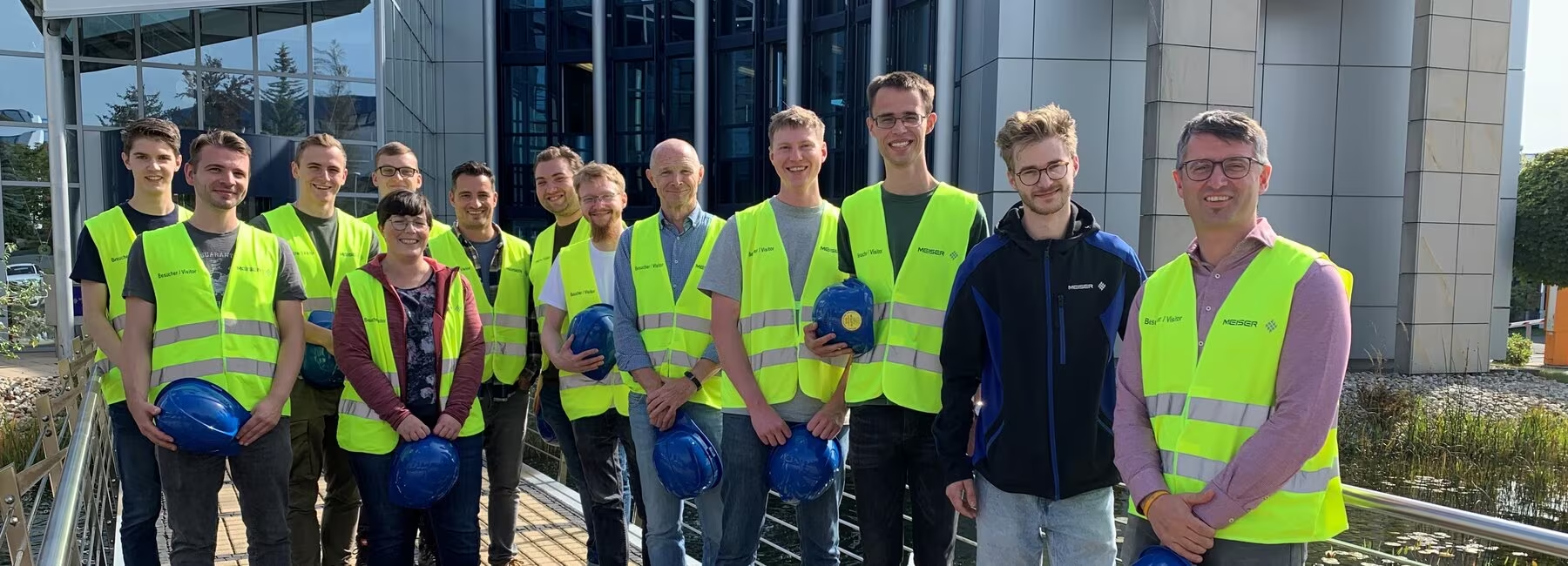
In this project, led by Professor Frank Köster and Scott Dombrowe, the aim is to analyse the coating process and to categorise and plan the pre-treatment steps. This also includes the design and construction of the vessels, heaters and measurement technology, as well as the implementation of the sample handling system. This will be followed by the practical implementation. Through a student in the group, an opportunity arose for a field trip to Meiser, a company which operates a large hot-dip galvanising plant at its Oelsnitz site.
Following their arrival, a brief presentation was given introducing the company – which has its headquarters in the Saarland – its site and history in Oelsnitz, and its product range. Professor Köster then gave a presentation on Mittweida University of Applied Sciences and the Electroplating and Surface Technology Research Group.
This was followed by a tour of the hot-dip galvanising plant, which came into operation in 2020. The experienced staff on site explained the production layout and demonstrated the entire process up close. There was ample opportunity for in-depth discussions and questions. The hot-dip galvanising tank holds approximately 350 tonnes of zinc and is fortified with trace amounts of other metals. Dimensions of up to 9 metres in length are possible. The pre-treatment process is fully automated. The tour took place whilst the plant was in operation and provided detailed insights into the manufacturing processes.