

This page was translated automatically using artificial intelligence (DeepL). The German version is binding. More information about automatic translation
News Intranet
This page was translated automatically using artificial intelligence (DeepL). The German version is binding. More information about automatic translation
The Leipzig specialist seminar organised by the German Society for Surface Technology and the Central Association for Surface Technology has developed into the region’s most important industry event in recent years. On 9 March, the specialist seminar took place alongside Intec and Z-Messe at the Leipzig Exhibition Centre’s Congress Centre.
Around 250 participants enjoyed a wide-ranging programme of presentations. In addition to the industry’s approach to the REACH Regulation, topics covered included the wastewater treatment of electroplating rinsing baths, pre- and post-treatment processes employed by various specialist firms, as well as insights into the activities of research institutions.
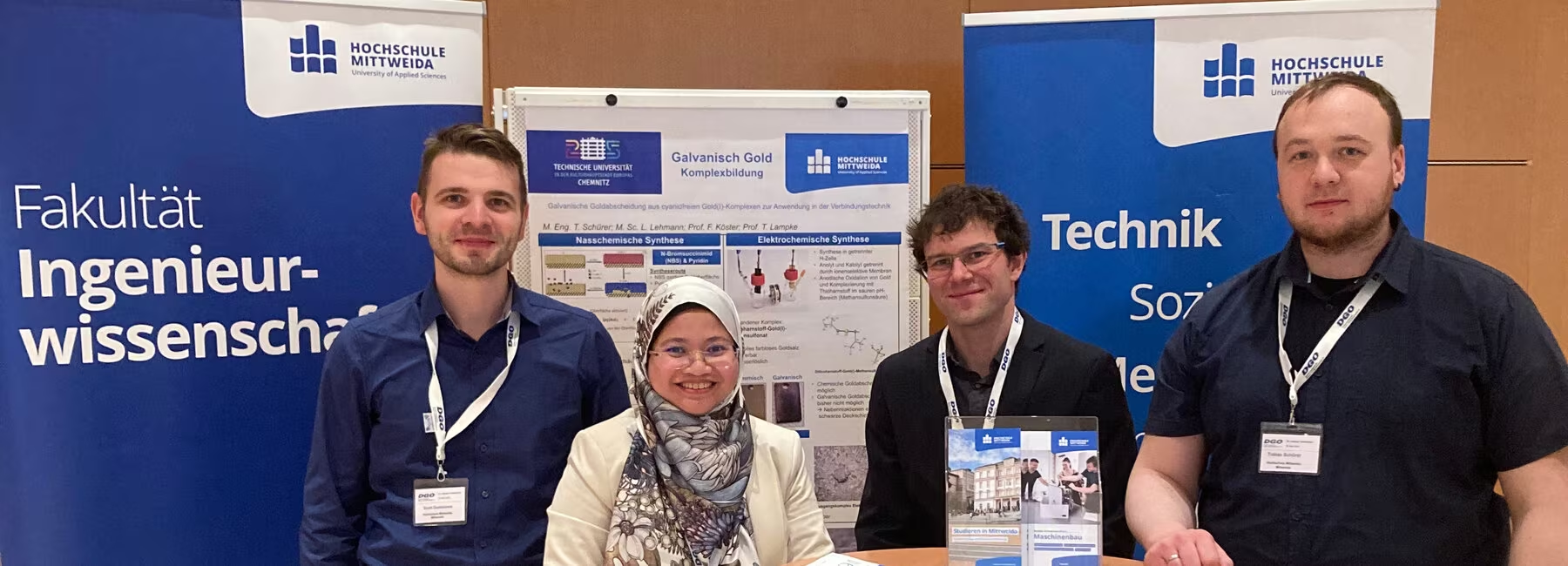
As well as attending the programme of presentations, participants had the opportunity to engage in direct discussions with representatives of specialist firms at the industry exhibition. Mittweida University of Applied Sciences was also represented there. At the engineering department’s stand, seminar visitors were able to gain an insight into current research.
At the stand, Tobias Schürer presented the GaGoKom project, which aims to develop a cyanide-free gold electrolyte; this project has been underway since 2021 in collaboration with Chemnitz University of Technology under the leadership of Prof. Köster. In addition to the GaGoKom project, the research group informed interested guests about the incorporation of boron particles into nickel-phosphorus layers, the possibilities for induced alloy deposition of ternary alloy systems comprising nickel, tungsten and rhenium, and the electrochemical deposition of precious metal catalysts for water electrolysis.
Text: Johannes Näther
Photo: private