

This page was translated automatically using artificial intelligence (DeepL). The German version is binding. More information about automatic translation
News Intranet
This page was translated automatically using artificial intelligence (DeepL). The German version is binding. More information about automatic translation
On the Master’s programme in Genomic Biotechnology, students learn not only a wide range of molecular biology methods but also next-generation DNA sequencing – thus ensuring they are optimally prepared for a career in the broad field of Biotechnology. But can next-generation DNA sequencing also help us understand how human activity affects water bodies? Can we use such DNA analyses, for example, to gain a rapid yet in-depth understanding of the ecological development of Saxony’s opencast mining lakes in the future?
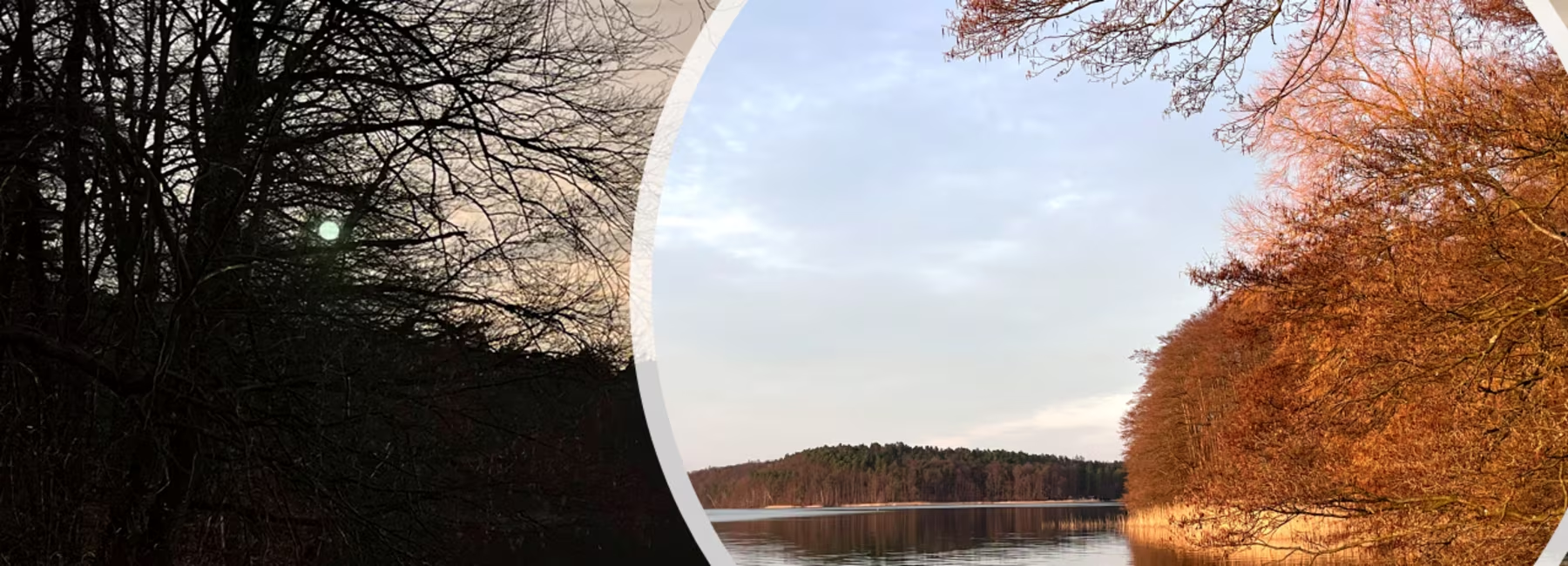
To answer such questions, students on the Master’s programme in Genomic Biotechnology have, for the second time, gone on a field trip to the Leibniz Institute of Freshwater Ecology and Inland Fisheries (IGB) at Großer Stechlinsee. Lake Stechlin is a large, near-natural lake, but there are also several artificial, heavily human-influenced bodies of water in the area. This makes the area an interesting location for comparing different types of water bodies using DNA sequencing (metagenomic analyses) of algal plankton. The DNA sequencing results for the algae have now been finalised and presented by the Master’s students in their final presentations.
At Lake Stechlin, the students learnt about and applied key methods in limnology (the study of lakes), including plankton sampling, probe-based physical analyses, nutrient analyses and automated microscopy. The deep-frozen plankton samples were then taken back to Mittweida. Here, the DNA – the metagenome, so to speak – was isolated, and specific DNA segments were amplified using the PCR method and finally sequenced. Bioinformatics was now crucial in order to make sense of thousands upon thousands of DNA sequences. This enabled the signals to be assigned to the various groups of algae. The DNA work and bioinformatics were carried out over a number of practical days spread throughout the summer semester in Mittweida.
The head of the HSMW Group, Professor Henrik Buschmann, is enthusiastic: “Lake Stechlin is a place of longing. Clear, clean water, surrounded by unspoilt nature. Yet we must recognise that the lake is changing, albeit quite slowly. Other bodies of water are much more heavily influenced by human activity – just think of the opencast mining lakes in Saxony. DNA sequencing can help us understand what is happening to the ecology in each case. Biotechnology can therefore make an important contribution here.”
The results presented here demonstrate the ecological diversity of the water bodies studied. In artificial ponds or lakes, we find microorganisms that have been able to adapt to typical, man-made environmental conditions. We can observe, for example, that such artificial water bodies can harbour complex communities of dinoflagellates, a group of microalgae. These algae are mostly harmless, but there are also species that are responsible for toxic blooms. It is therefore worth keeping an eye on the development of such bodies of water – for example, using DNA metagenome analyses.
The group have been back home for some time now, but they still fondly look back on their adventure at Stechlin. Special thanks go to the staff at the IGB Stechlin, in particular to the working group leader, Dr Stella Berger, and to Ms Maren Lentz, for their expert and ever-cheerful support. A boat trip is great fun – and even if the engine breaks down, you’ve still got to carry on somehow … indeed, every problem is sorted out by the IGB staff in no time at all. Many thanks also to the Wünschiers working group (HSMW) for technical support with DNA sequencing and to the Student Council (STURA, HSMW) for financial support.
Text and images: Prof. Henrik Buschmann