

This page was translated automatically using artificial intelligence (DeepL). The German version is binding. More information about automatic translation
News Intranet
This page was translated automatically using artificial intelligence (DeepL). The German version is binding. More information about automatic translation
As part of the EU project NiWRe-Alloys, led by Mittweida University of Applied Sciences, three years of intensive research and development were carried out into new nickel-rhenium and nickel-tungsten alloy electrolytes for electroplating, as well as the characterisation of the coating properties.
NiWRe-Alloys stands for “Electroplating of NiW and NiRe alloys as functional alternative coatings”. The objectives were to electroplate X-ray absorber grids microstructured with nickel alloy layers for medical applications (in CT scanners as a cost-effective alternative to gold) and to replace toxic chromium(VI)-containing electrolytes used in the production of hard chrome coatings.
Under the leadership of Professor Frank Köster from the Faculty of Engineering Sciences, a total of six research institutions and SMEs worked on the project in an interdisciplinary manner. These included the Institute for Corrosion Protection Dresden GmbH (IKS), the Extreme Light Infrastructure Nuclear Physics (ELI-NP) department of the Horia Hulubei National Institute of Physics and Nuclear Engineering, based in Romania, Stellenbosch University (SU), based in South Africa, and Mittweida University of Applied Sciences as research institutions, as well as CMF Oberflächenbeschichtung GmbH (CMF) and microworks GmbH (MW) as two small and medium-sized enterprises (SMEs).
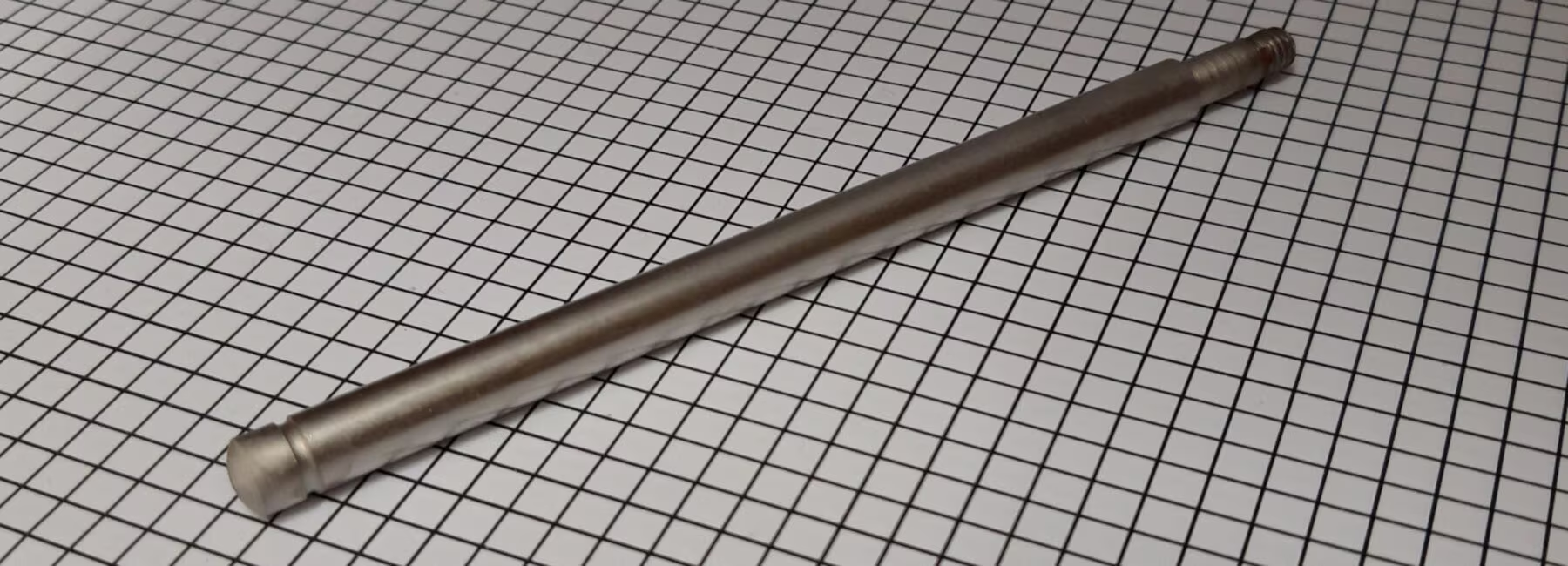
In the final phase of the project, the nickel-tungsten and nickel-rhenium electrolytes developed were tested as demonstrators by coating commercially available components. A piston rod was selected as a demonstrator for replacing hard chrome coatings. The successful, crack-free nickel-tungsten-coated piston rod is shown in Figure 1 and exhibits a shiny yellow surface.
With heat treatment as a post-treatment, the coating hardness can be increased to over 1200 HV, making it competitive with hard chrome coatings (800 to 1400 HV) in terms of hardness. Further investigations into wear and corrosion resistance may be carried out in the future.
A lithographically fabricated, microstructured 4-inch wafer with a feature height of approximately 250 µm and a feature width of approximately 10 µm (corresponding to an aspect ratio of 25) was successfully electroplated with nickel-rhenium and served as a demonstrator for an X-ray absorption grating for use in computed tomography scanners (Figure 2). In total, the deposition of the ReNi alloy took 50 hours.
Further research into the electroplating of microstructured X-ray absorption gratings will continue in the future as part of Scott Dombrowe’s PhD thesis. As part of a collaborative PhD programme with Chemnitz University of Technology (Prof. Lampke) and Mittweida University of Applied Sciences, he is investigating the mechanisms involved in the electrochemical deposition of nickel-rhenium alloy layers in microstructures.
Text: Scott Dombrowe and Prof. Frank Köster;
Photographs: Scott Dombrowe