

This page was translated automatically using artificial intelligence (DeepL). The German version is binding. More information about automatic translation
News Intranet
This page was translated automatically using artificial intelligence (DeepL). The German version is binding. More information about automatic translation
At the end of September, the Laserinstitut Mittweida University of Applied Sciences (LHM) attended COLA. However, this event has nothing to do with the cult caffeinated drink; rather, COLA stands for Conference on Laser Ablation, an international conference focusing on various aspects of material removal using laser radiation. This conference takes place every two years at a variety of locations around the globe. This year, it was held on Crete, Greece’s largest island.
Over the course of the five days, participants were able to learn about the latest developments – including in the fields of laser-matter interaction, new trends in laser processing and laser interaction with liquids; they were also able to exchange ideas and network with the more than 250 other participants, or maintain existing contacts.
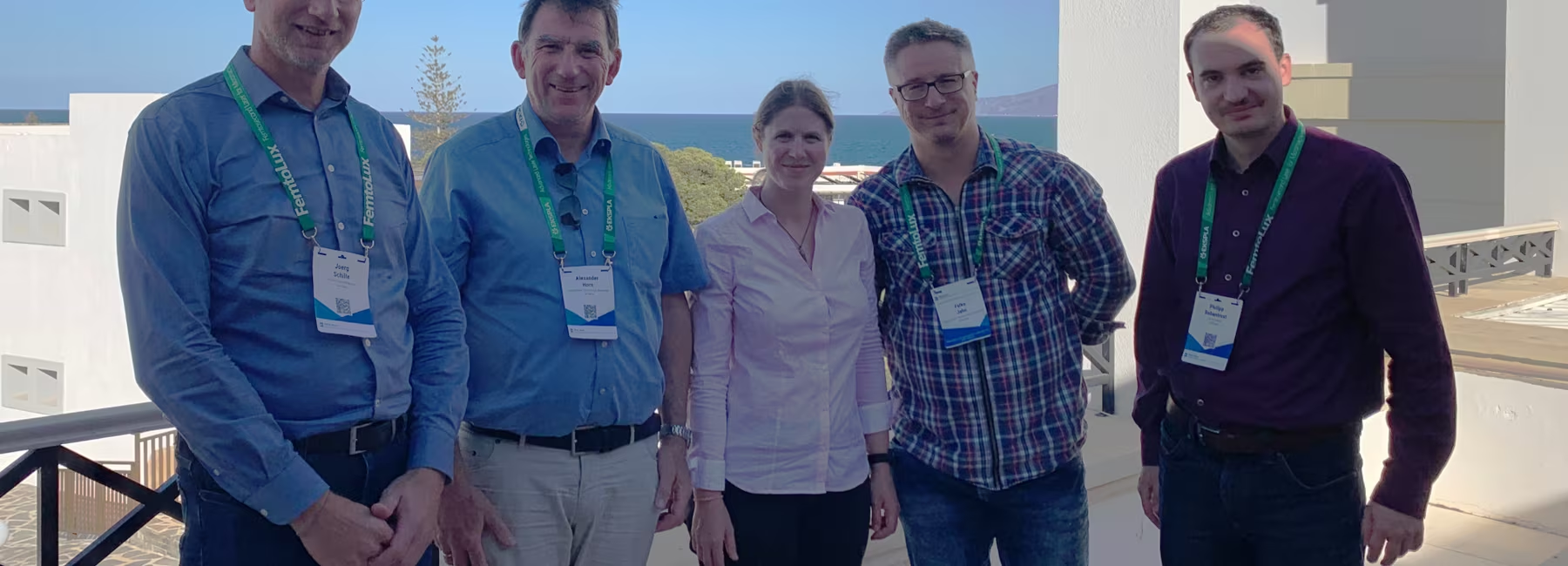
The Mittweida research group was represented in the conference programme with a total of two specialist presentations and three poster presentations. In his presentation, Professor Alexander Horn discussed the processes involved in the ablation of thin gold layers using ultrashort laser pulses (ULP), which his research group has been investigating. Philipp Rebentrost presented his research on the ablation of tungsten carbide cemented carbide using UKP burst pulses (i.e. ultrashort laser pulses that are broken down into several smaller individual pulses).
During the poster sessions, Linda Pabst and Dr Jörg Schille discussed their findings on high-rate laser smoothing and highly efficient ablation using long bursts of pulses, respectively, with interested attendees. Falko Jahn presented methods for reducing spatter (so-called droplets) in the layers produced during laser pulse deposition.
A distinctive feature of this conference is that it enables participants to discover the culture and history of the respective venues. This is particularly true when the venue is a place with such a rich and eventful history stretching back millennia as Crete. Consequently, on one afternoon during the conference, participants were given the opportunity to visit Spinalonga – the ancient fortress island and Europe’s last leper colony – before the day drew to a close with the conference dinner. At the end of what had been a demanding week, the five researchers from Mittweida were able to look back on a successful event. They were able to take home with them numerous contacts, suggestions and ideas for joint projects.
Text: Falko Jahn, Jörg Schille, Philipp Rebentrost
Photos: Falko Jahn, (3): Mingming Pan