

This page was translated automatically using artificial intelligence (DeepL). The German version is binding. More information about automatic translation
News Intranet
This page was translated automatically using artificial intelligence (DeepL). The German version is binding. More information about automatic translation
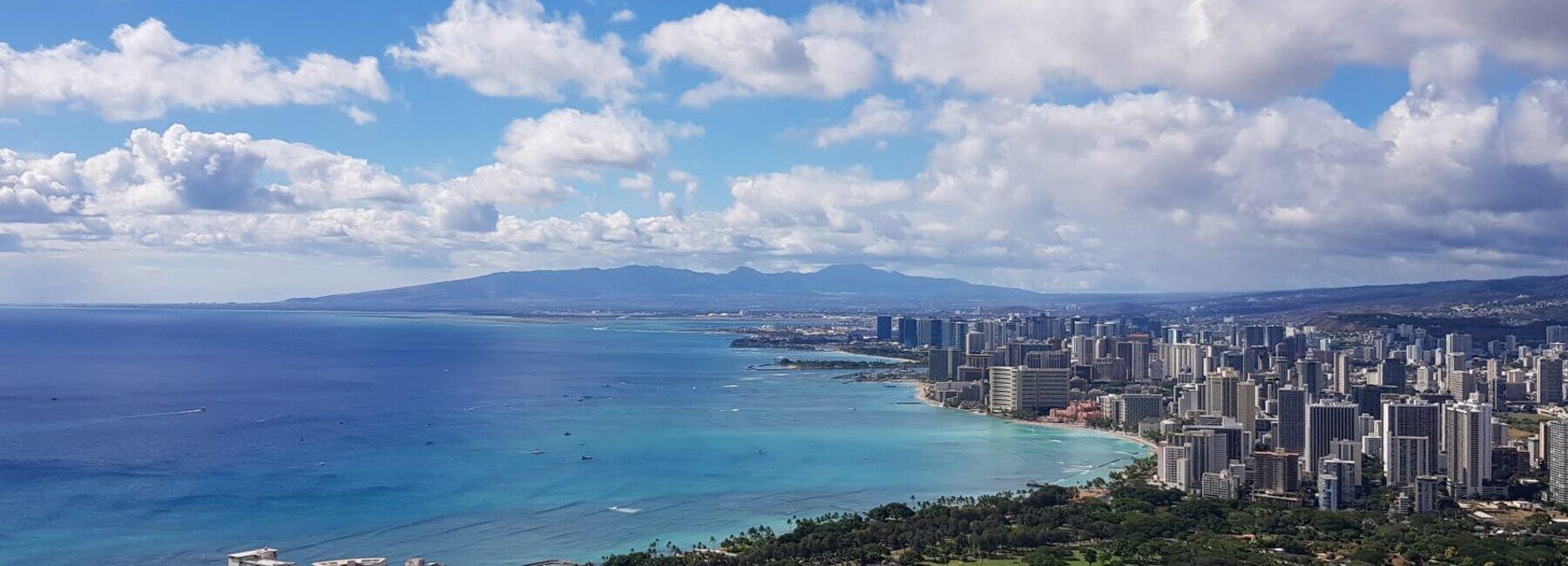
Hawaii isn’t just about beaches and palm trees; its location in the middle of the Pacific Ocean makes it the perfect venue for a global conference. Participants from Japan, Korea, South-East Asia and the Americas can meet halfway. For those working in Europe, it wasn’t exactly the nearest venue, but hey, it’s Hawaii!
That was the idea behind the Joint Pacific Rim International Meeting, PRiME, which takes place every four years. PRiME 2024, which took place in early October at the Hawaiian Convention Centre and the Hilton Hawaiian Village, was jointly organised by the Electrochemical Society (ECS), the Electrochemical Society of Japan (ECSJ) and the Korean Electrochemical Society (KECS).
The main theme of the conference was electrochemistry.
Around 5,000 scientists from 60 countries took part in the 50 symposia held during the six-day conference. In addition to the 3,249 oral presentations and 1,583 posters, there were 674 invited talks and 48 ECS awards and keynote speeches. 60 per cent of the posters and 36 per cent of the oral presentations were delivered by students; the remainder were given by established scientists.
The topics of discussion ranged from battery technologies and fuel cells, through corrosion, sensor technology and dielectrics, to luminescent materials and electrochemical deposition, to name but a few. This event is the ideal platform for experts from academia and industry to discuss important and topical issues relating to global challenges across the association’s many divisions (link to ECS divisions) and to identify opportunities for future collaboration.
Nurul Amanina Binti Omar, a research assistant in the Faculty of Engineering Sciences, Galvanic and Surface technology Group (led by Professor Frank Köster), had the opportunity to present the latest findings from the Mera.netproject ‘Electroplating NiW/NiRe and NiWRe alloys as functional alternative coatings’ in a presentation on the effects of aqueous electrolyte composition and deposition parameters on the electroplating of nickel-rhenium alloys. She received support in preparing the presentation from Scott Dombrowe, a colleague also involved in the project.
In addition, together with Dr Martin Leimbach (Ilmenau University of Technology) and Dr Kent J.X. Zheng (University of Texas, Austin), she chaired two sessions (Early Career Sessions 1 and 3). Finally, the author organised a lunch for the Early Career Forum together with Dr Leimbach and Dr Zheng. This is a sub-group of the Electrostatic Deposition Division (ELDP), which serves as a platform for PhD students and early-career postdocs within the ELDP to network and brainstorm ideas for future activities.
It was a successful conference for the young researcher from Mittweida. During the conference, she was not only able to forge new contacts, but also gain a great deal of new interdisciplinary knowledge and gather many ideas for future projects.
Further information about the conference can be found at the following link: Homepage | PRiME 2024.
Information about the project is available at the following link: Electroplating NiW and NiRe alloys as functional alternative coatings – M-ERA.NET
Text: Nurul Amanina Binti Omar
Images: Nurul Amanina Binti Omar, (2): ECS, (5): Dr Adriana Ispas.