

This page was translated automatically using artificial intelligence (DeepL). The German version is binding. More information about automatic translation
News Intranet
This page was translated automatically using artificial intelligence (DeepL). The German version is binding. More information about automatic translation
This is the sort of post one is always pleased to receive: in July, Mittweida University of Applied Sciences was delighted to receive no fewer than two grant notifications from the BMWK’s Central Innovation Programme for SMEs (ZIM). The ZIM programme promotes the innovative capacity of small and medium-sized enterprises by supporting research and development activities aimed at developing innovative products, processes or technical services, without restriction to specific technologies or sectors.
Meta3D – Resource-efficient, metal-coated, 3D-printed plastic mould inserts for injection moulding
The aim of the project is to develop resource-efficient, metal-coated, 3D-printed plastic mould inserts for injection moulding. The disadvantages of uncoated 3D-printed inserts, particularly with regard to surface finish, temperature resistance, thermal conductivity and mechanical properties are to be significantly minimised by coating them with an adhesive layer system to create a more robust and functionalised surface. The advantageous properties of additive manufacturing processes are to be utilised and combined with surface modification methods to compensate for existing limitations of these processes. Etching processes involving environmentally harmful, aggressive chemicals for the pre-treatment of plastics are to be replaced by environmentally friendly processes. In particular, plasma processes are to be used for cleaning, activating and altering the topography (micro-roughening) of the plastic surfaces in order to ensure the adhesion of the coating system. The project leader is Professor Frank Köster from the Faculty of Engineering Sciences. The project partners are SK Industriemodell GmbH from Übach-Palenberg, Malping GmbH from Neuhausen auf den Fildern and Hof University of Applied Sciences (Free State of Bavaria). The project will run from 1 September 2024 for a period of two years.
HAV implant – Hasiso / Laser-assisted coating with doped carbon layers and functionalisation through surface structuring
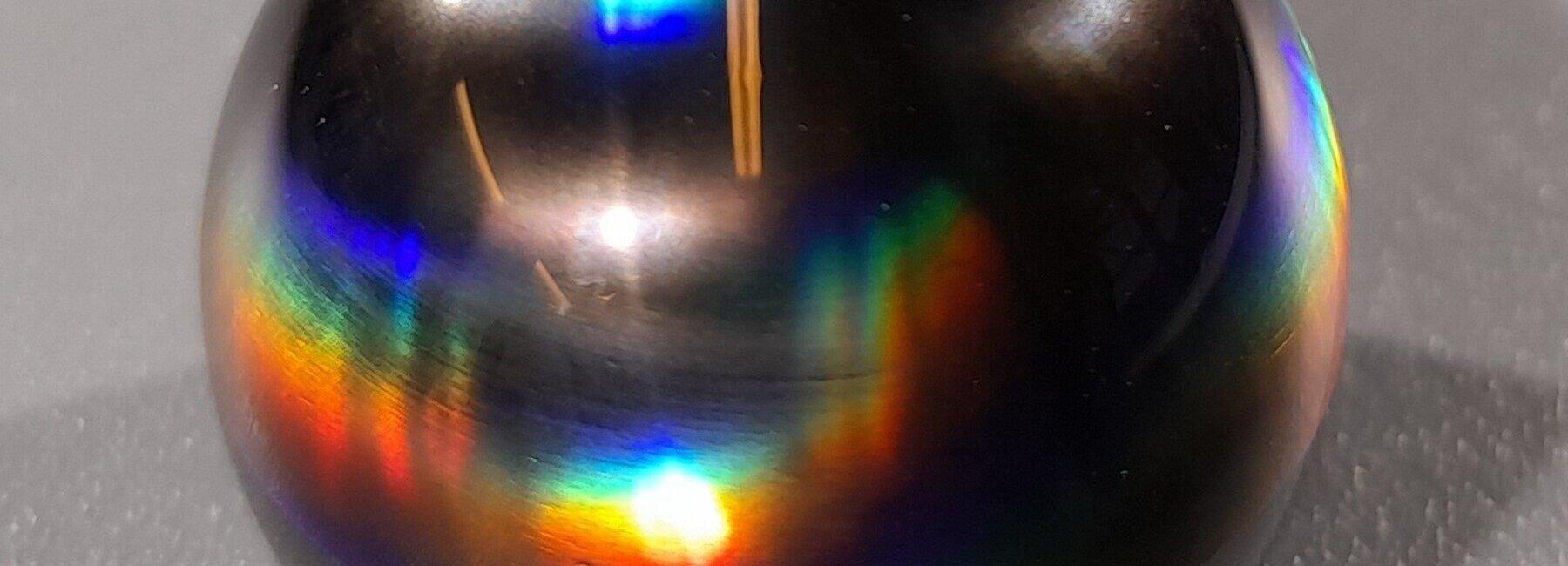
The aim is to develop minimally invasive (bone-preserving) shoulder joint implants made of stainless steel (ISO 5832-1) as representative types, whose surfaces are optimised by means of laser structuring and pulsed laser deposition (PLD) with regard to biological properties such as osseointegration, antibacterial effects and the prevention of post-prosthetic infections (PPI). This is intended to increase both the service life of the implants and patient comfort. The antibacterial effect is to be achieved through a laser-assisted doping process for carbon-based hard coatings deposited by PLD. In this process, silver ions, amongst other substances, are implanted into the carbon matrix. To achieve a hybrid effect on the surface in terms of enhanced osseointegration, surface structures are to be introduced in a targeted manner using direct laser structuring. The project leader is Professor Steffen Weißmantel from the Laser Institute at Mittweida University of Applied Sciences. The partners are Wersoma GmbH from Magdeburg, Mechanische Metallbearbeitung Mierwald GmbH from Schönebeck and Otto von Guericke University Magdeburg. The project will run from 1 August 2024 for a period of two years.
Further information on the ZIM programme is available on the programme’s website via the following link: https://www.zim.de/ZIM/Navigation/DE/Home/home.html
For all enquiries regarding funding and applications, please contact the Research Department
Images:
Images 1, 3 and 4: Mittweida University of Applied Sciences;
Image 2: Source: formlabs.com/_next/image/url=https%3A%2F%2Fformlabs-media.formlabs.com%2Ffiler_public_thumbnails%2Ffiler_public%2F60%2F3b%2F603b846e-a0dd-4244-b0d7-1f2024395683%2F11192018_htv2_125_1.jpg__1354x0_q85_subsampling-2.jpg&w=1920&q=75