

This page was translated automatically using artificial intelligence (DeepL). The German version is binding. More information about automatic translation
News Intranet
This page was translated automatically using artificial intelligence (DeepL). The German version is binding. More information about automatic translation
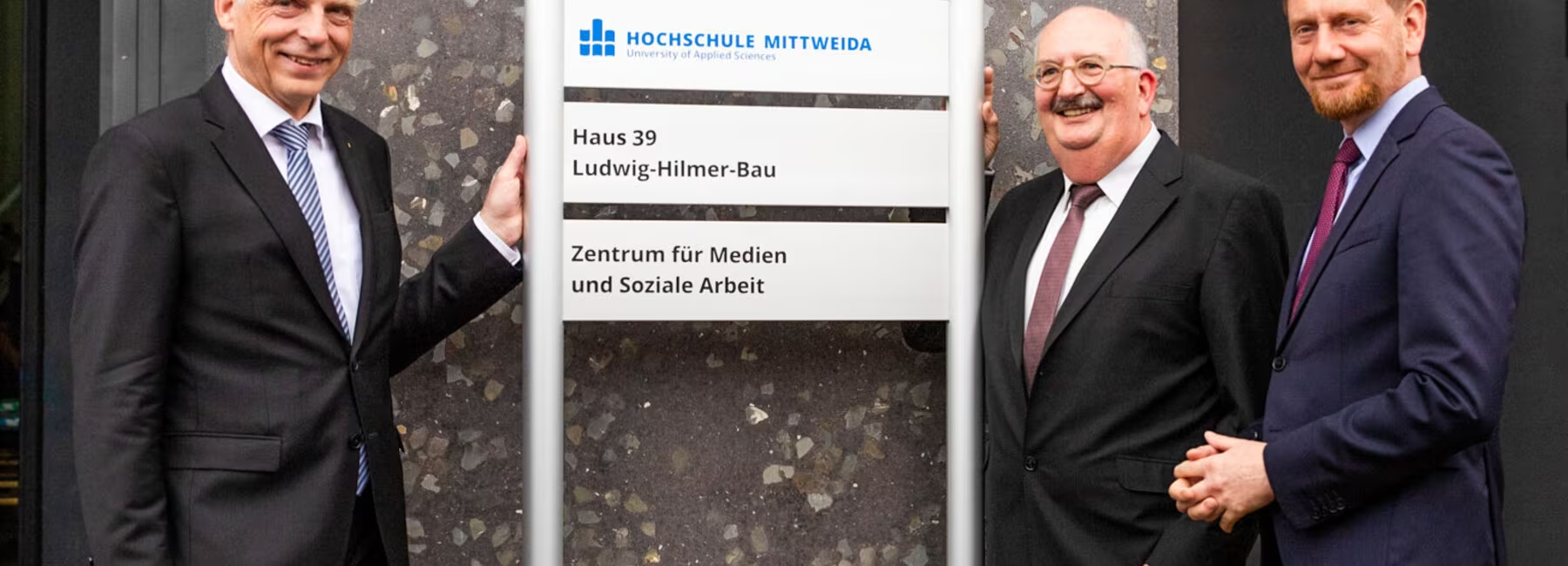
As of today, the Centre for Media and Social Work (ZMS) at Mittweida University of Applied Sciences bears the additional name ‘Ludwig-Hilmer-Bau’. This morning, in the presence of Minister-President Michael Kretschmer and around two hundred guests attending the commemorative colloquium for Professor Ludwig Hilmer, Rector Professor Volker Tolkmitt presented the silver plaque bearing the inscription to his predecessor. Hilmer served as Rector of Mittweida University of Applied Sciences from September 2012 to February 2023. The Centre for Media and Social Work was inaugurated in 2014 and is one of the most modern university-level training centres for media in Europe.
Tolkmitt said: “Since the mid-1990s, as Professor of Media Studies and Media Practice, and since 2011 as Vice-Dean and Dean, Professor Ludwig Hilmer has played a key role in shaping practice-oriented academic media education based on the Mittweida model. The success of the degree programmes amongst young people and within the media industry led to the creation of the largest media faculty in eastern Germany – and gave rise to the need for a modern, future-proof building. All studios, editorial offices and laboratories were to be brought together under one roof.”
As a committed and visionary Vice-Dean, Hilmer helped conceive and plan the new building – and as Rector, he inaugurated it in 2014, Tolkmitt continued.
“The Faculty of Social Sciences also found a new home in Mittweida under this roof in 2014, after the Roßwein site had to be closed down. Thanks to Ludwig Hilmer’s work as rector, the faculty is now not only physically an integral part of academic and social life on the Mittweida campus. The ‘ZMS’ therefore now rightly bears the name ‘Ludwig-Hilmer-Bau’.”
The appointment took place at midday today, immediately following the commemorative symposium in honour of Ludwig Hilmer at the ZMS, attended by around two hundred guests from the worlds of academia, politics, business and society. The Prime Minister of Saxony delivered the laudatory address in honour of Hilmer.
A report will follow here in the HSMW News.
About Ludwig Hilmer
Prof. Dr. phil. Dr. h. c. mult. Ludwig Hilmer (64) has been a professor at Mittweida University of Applied Sciences since 1996; he was the founding dean of the Faculty Media Sciences and a member of the University Council. From 2012 to 2023, he served two terms as Rector of Mittweida University of Applied Sciences. His successor, Prof. Dr. rer. oec. Volker Tolkmitt (56), took up the post on 15 February 2023.
About the Ludwig Hilmer Building
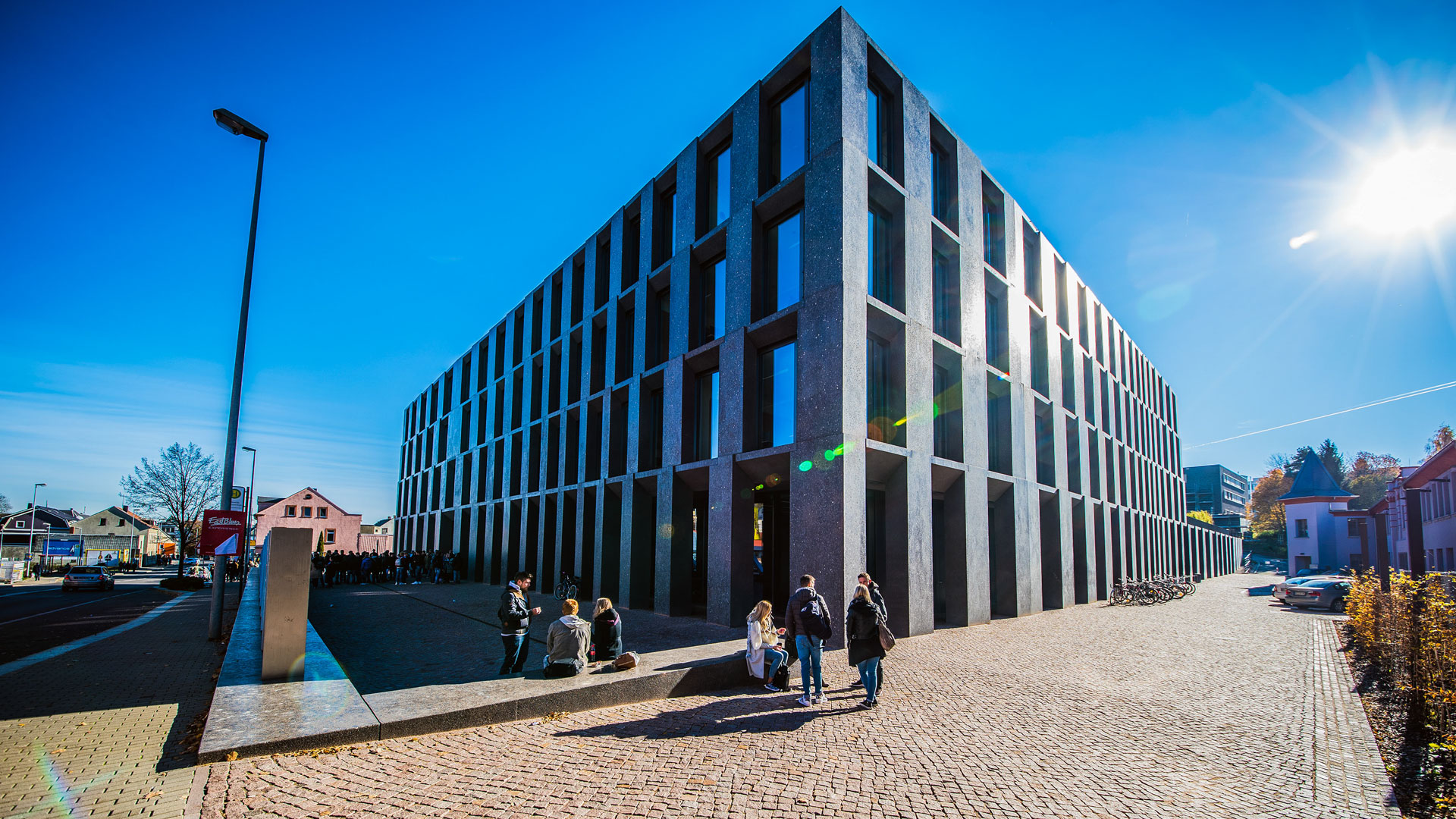
By the time it was completed in 2014, 37 million euros had been invested in the construction and fitting-out of the university’s Centre for Media and Social Work (ZMS). A land swap with the town of Mittweida made it possible for the building to be erected in the heart of the university town rather than on a greenfield site. On Bahnhofstraße, the ZMS established the South Campus, which underwent its first expansion in 2016 with the construction of the Laser Institute’s new research building.
With approximately 5,700 square metres of usable floor space, including a 400-square-metre television studio, the building not only links the cross-media academic programme – with its many practical projects – both technically and spatially, but also brings together the two faculties of Media Sciences and Social Sciences.
Mittweida University of Applied Sciences currently has 5,529 students enrolled (as at 1 May), including 1,529 on ten Bachelor’s and Master’s degree programmes in the Faculty Media Sciences, and 511 students on four degree programmes in the Faculty Social Sciences.