

This page was translated automatically using artificial intelligence (DeepL). The German version is binding. More information about automatic translation
News Intranet
This page was translated automatically using artificial intelligence (DeepL). The German version is binding. More information about automatic translation
Climate change is one of the greatest challenges of our time, which must be tackled through joint efforts at global, national and local levels. Mittweida University of Applied Sciences (HSMW) is taking action – in Saxony and with an international reach – in an area that is equally important: sharing global knowledge on how to tackle climate change.
To this end, the university hosted the first international climate forum, ‘Science for Livelihood – Interdisciplinary Forum on Research-Based Approaches for Climate Resilience’, at the Centre for Media and Social Work from 13 to 16 June. Co-organisers included the African climate competence centres SASSCAL and WASCAL, the International Centre for Water Resources and Global Change (ICWRGC) in Koblenz, and the University of Würzburg.
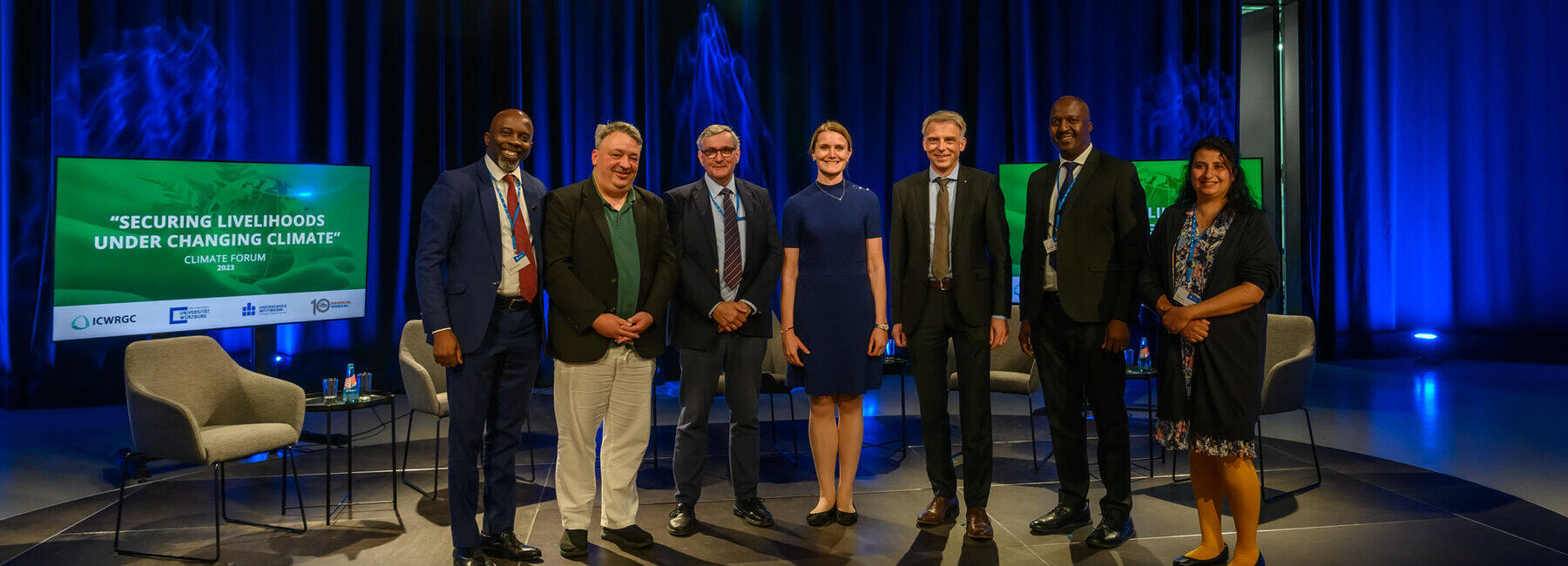
The interdisciplinary forum brought together stakeholders from both neighbouring continents, representing universities, research institutions and the political sphere. Insights into the impacts of climate change were just as much a focus of the discussions in the various conference groups as safeguarding living conditions and preserving ecosystems on both sides of the Mediterranean.
The Rector of HSMW, Professor Dr Volker Tolkmitt, and the Lord Mayor of the university town, Ralf Schreiber, opened the Climate Forum on the morning of 13 June. Tolkmitt: “As with all issues concerning the future … we do not focus on individual aspects, but rather integrate the topic across teaching, research, knowledge transfer and university management. We are constantly seeking practical applications to drive improvements within the university, the business community or the university town.”
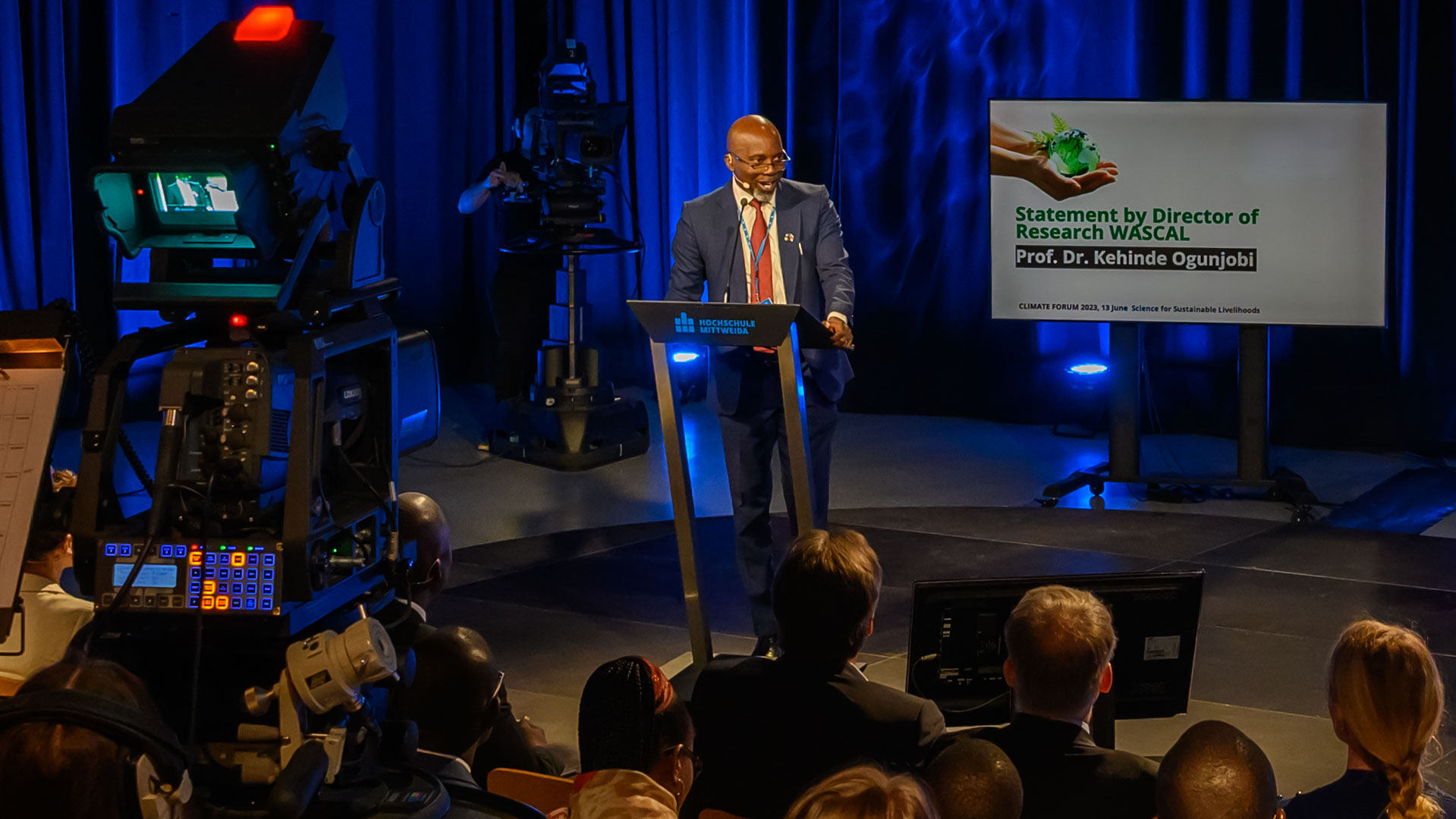
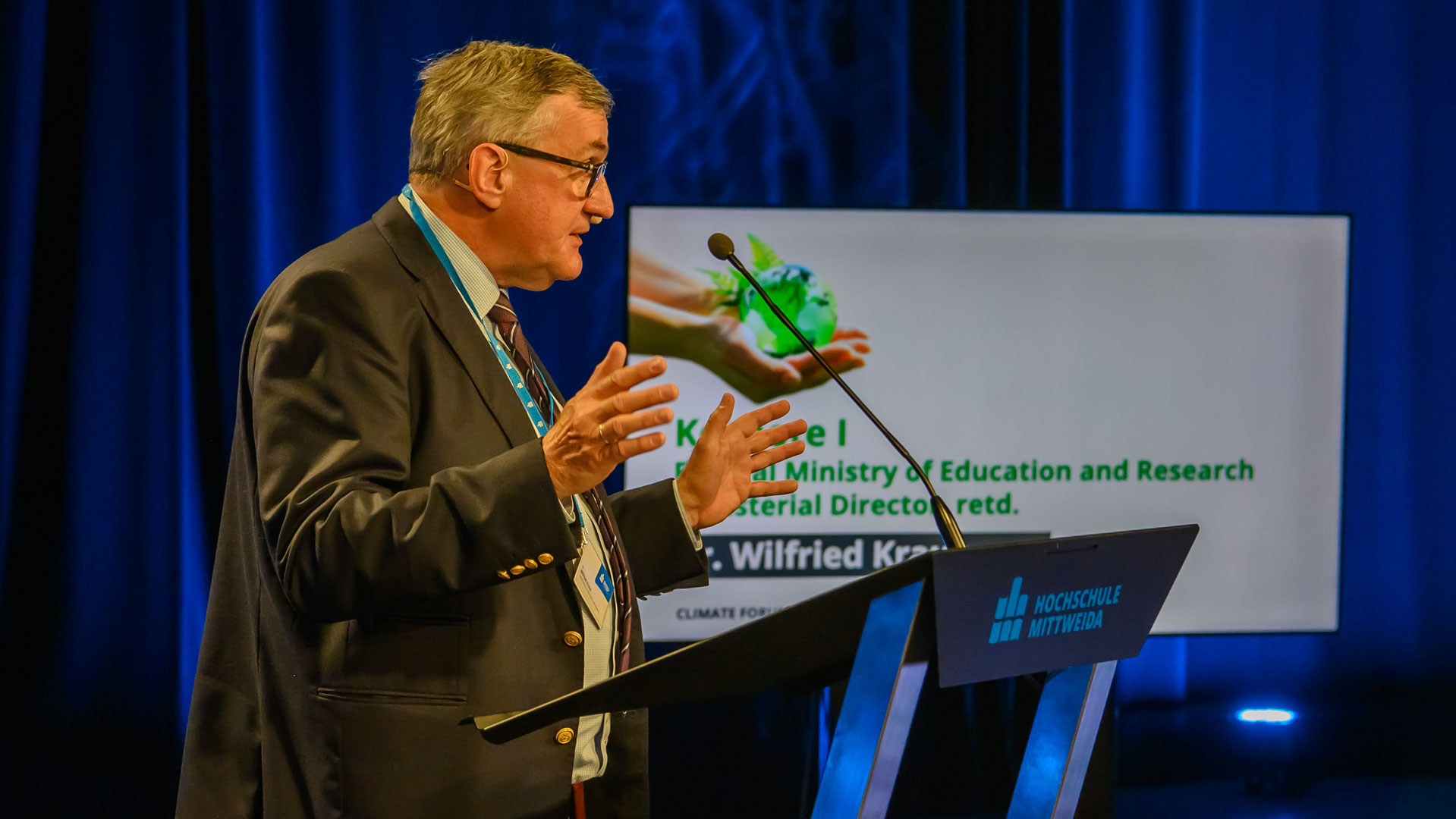
In the subsequent plenary session, following introductory statements by the representatives of SASSCAL and WASCAL, Dr Budzanani Tacheba, and Prof. Dr Kehinde Ogunjobi, were followed by insights from the worlds of politics and academia in the keynote speeches by Dr Wilfried Kraus, former Director-General at the Federal Ministry of Education and Research (BMBF), and Prof. Dr Sina Leipold, Head of the Department of Environmental Policy at the Helmholtz Centre for Environmental Research in Leipzig.
Like the two subsequent days of the forum, the afternoon featured presentations and workshops in various thematic sessions, including one on hydrogen led by Prof. Dr Röbbe Wünschiers (HSMW) and one on data modelling led by Prof. Dr Kristan Schneider (HSMW). Water management and agriculture were also topics on which the researchers exchanged views.
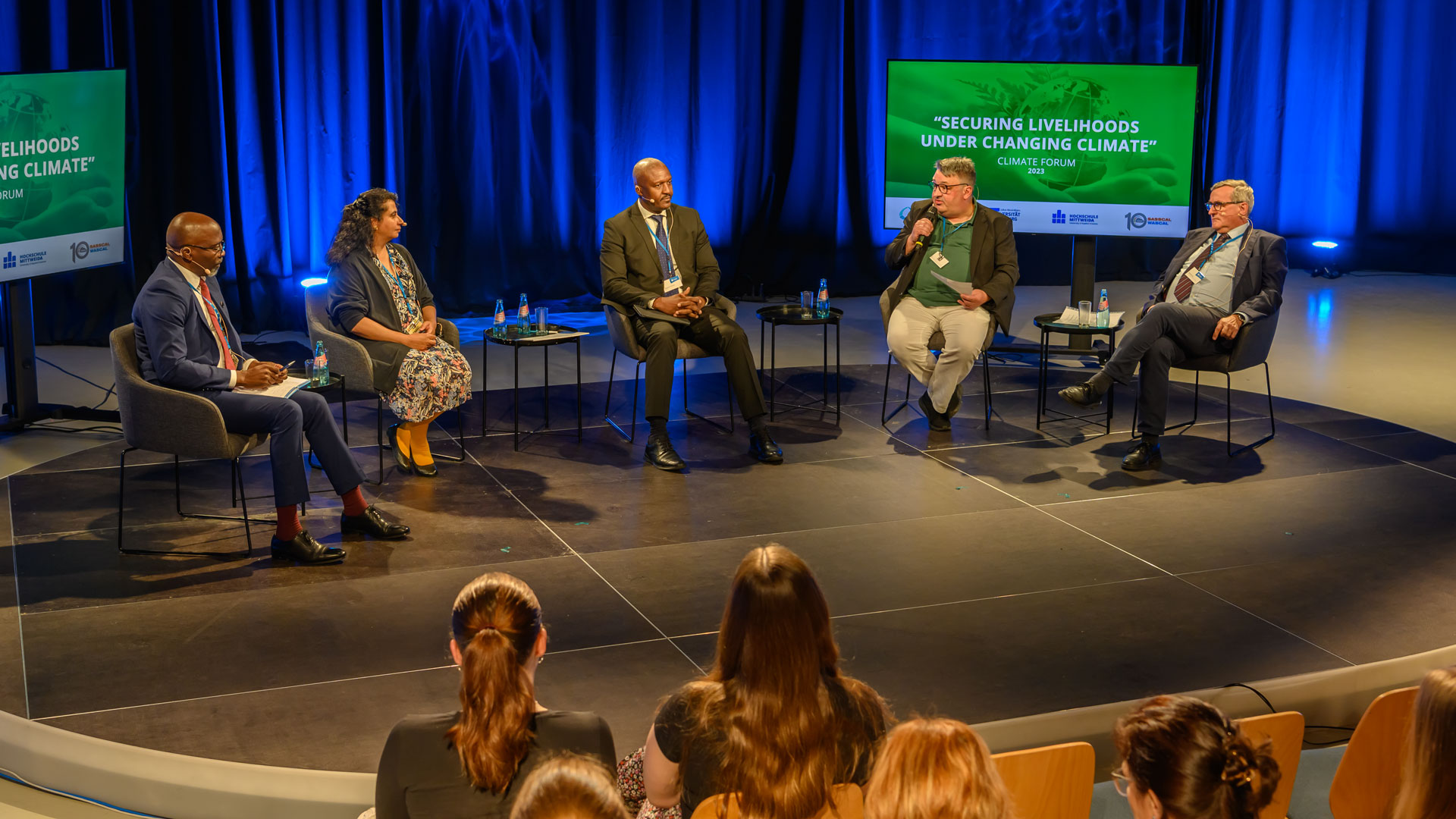
Panel discussion: Safeguarding livelihoods in the face of climate change
On the evening of 13 June, the panel discussion entitled ‘Securing Livelihoods under a Changing Climate’ provided insights into the work of the researchers. Representatives from WASCAL and SAASCAL discussed ways of securing livelihoods in Africa and Europe alongside the ICWRGC in the university’s TV studio.
A recording of the panel discussion is available to watch on Mittweida University of Applied Sciences’ YouTube channel.
PD Dr Gunter Süß, Director of Studies at the Institute for Competence, Communication and Languages at Mittweida University of Applied Sciences (IKKS), chaired the panel discussion. His conclusion: “The panel on Tuesday evening – like the Climate Forum as a whole – demonstrates how important it is to meet in person when working towards a common goal. This direct exchange of often very different perspectives, challenges, approaches and insights is invaluable; it facilitates cooperation across continents.”
For students on the Global Communication in Business and Culture degree programme at Mittweida University of Applied Sciences, the Climate Forum was an ideal opportunity to engage in conversation with the international guests. They also accompanied them during the Climate Forum as part of the supporting programme, on guided tours of the university and the university town of Mittweida, as well as on the final day in Leipzig.
Mittweida University of Applied Sciences’ international partners
Since 2022, Mittweida University of Applied Sciences has been collaborating with the African climate competence networks funded by the BMBF: the West African Science Service Centre on Climate Change and Adapted Land Use (WASCAL) and the Southern African Science Service Centre for Climate Change and Adaptive Land Management (SASSCAL). For over ten years, they have been working alongside German research institutions to find solutions to the challenges posed by climate change in Africa and to train the next generation of scientists. They do this through various graduate and research centres in eleven partner countries in West Africa and five in Southern Africa, each with its own specific focus. The focus is on topics such as sustainable land use, water supply and food security. In addition to these two organisations, the International Centre for Water Resources and Global Change (ICWRGC) in Koblenz and the Institute of Geography and Geology at the University of Würzburg collaborated at the HSMW Climate Forum.