

This page was translated automatically using artificial intelligence (DeepL). The German version is binding. More information about automatic translation
News Intranet
This page was translated automatically using artificial intelligence (DeepL). The German version is binding. More information about automatic translation
Mittweida University of Applied Sciences is a diverse place. This applies not only to the people who study, teach and conduct research here, but also to the campus itself as a habitat for all manner of plants and animals. Contributing to the preservation of local biodiversity is part of the climate and environmental management to which the university is committed through its HSMW Green Office and across all its departments.
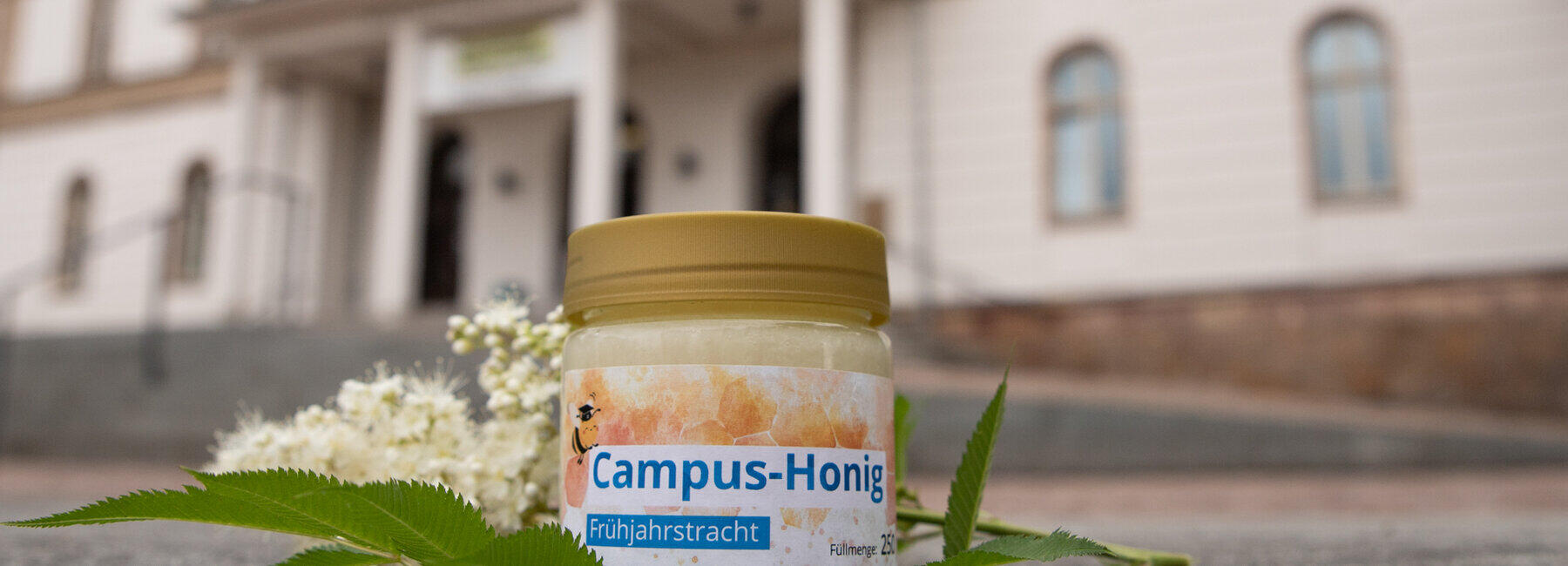
Nesting boxes in trees and under house eaves, a wildflower meadow, a bumblebee house, and climate-friendly transport thanks to a solar-powered bike charging station. And now we even have our own campus honey.
HSMW Campus Honey will soon be available at T9
Campus honey? That’s right. HSMW honey is now available to taste. Since April, two bee colonies have been busily collecting nectar from their hives on the flowering meadow above the Centre for Media and Social Work. They are looked after by Scott Dombrowe, who, alongside his work as a research assistant in the Faculty of Engineering Sciences, took up beekeeping as a hobby years ago.
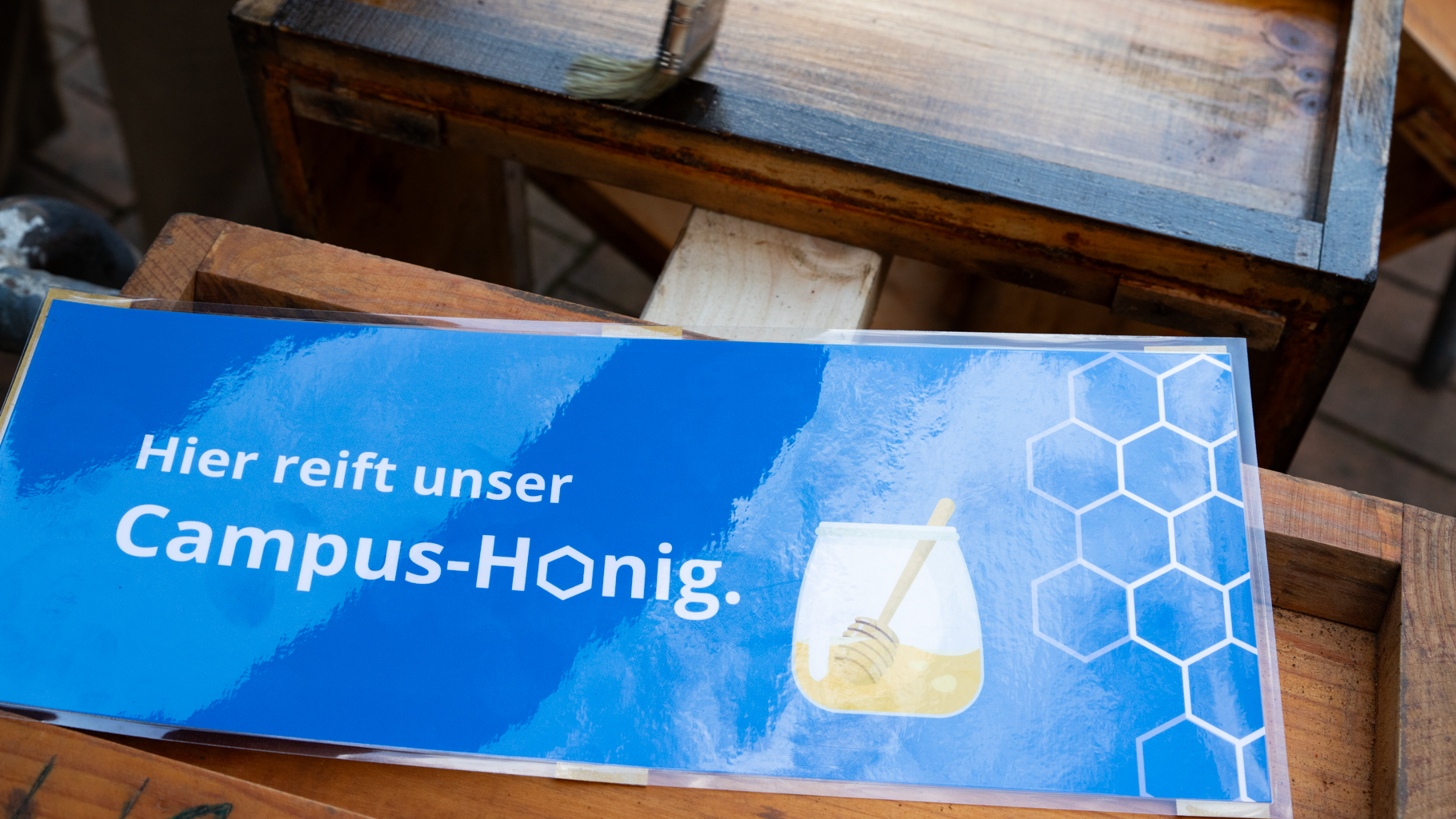
HSMW Campus Honey will soon be available at ‘T9’, the city and university information centre on Technikumplatz. Each jar contains 250 grams of honey, which was not only produced by HSMW bees but also extracted and bottled by members of the HSMW community.
Bees pose a challenge to research
The creamy ‘Campus Gold’ is more than just a symbol of the growing diversity and sustainability initiatives at Mittweida University of Applied Sciences. It also represents the practical focus of its researchers’ work.
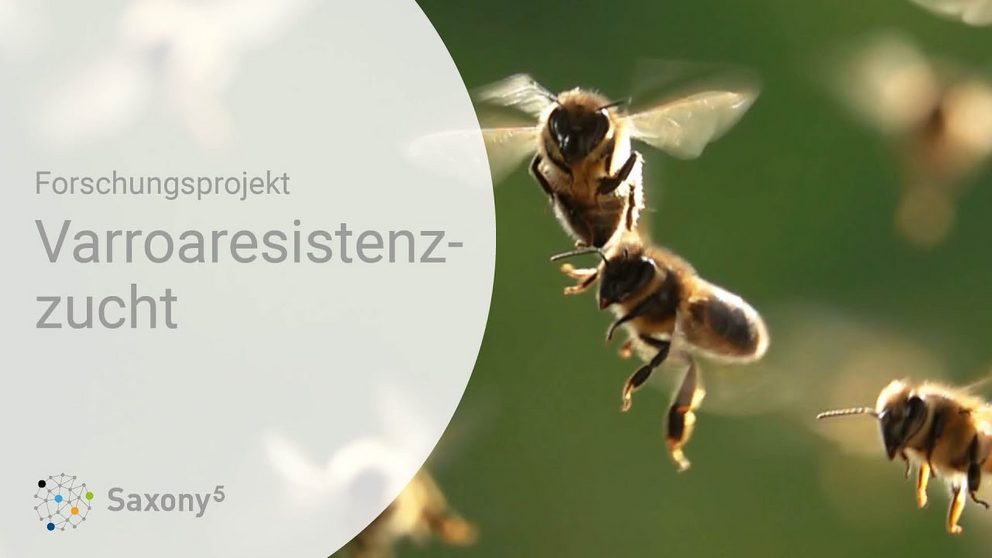
At the Faculty of Applied Computer Sciences and Biosciences, Professor Röbbe Wünschiers’ team is researching the health of honeybees and their wild relatives. One area of focus, in collaboration with the Landesverband Sachsen Varroaresistenzzucht e.V., is increasing the resistance of bee colonies to the harmful parasite Varroa destructor, the Varroa mite. As part of this work, PhD student Tom Schmidt is investigating genetic resistance markers in the Buckfast honey bee with a view to making these available for breeding in the future. In another project, a collaboration with Obstland Dürrweitzschen AG (Sachsenobst), PhD student Lisa Prudnikow is analysing the health of mason bees in the apple orchards of Central Saxony. To this end, she is analysing the pollen collected by the bees, as well as their bacterial fingerprints in their nests, at various points across the cultivation areas and in the surrounding landscape using a technique known as DNA metabarcoding.
University bees leave the city
The pollen contained in the campus honey was analysed using the same method. Campus beekeeper Scott Dombrowe from the Faculty of Engineering Sciences submitted a sample of early-season honey to Lisa Prudnikow at the Biotechnology Laboratory. The DNA contained in the pollen grains was sequenced and then matched against a database to identify the plant from which it originated.
The findings provide an initial indication of where the bees flew to collect the nectar – and pollen – required for honey production. The results of the biotechnological analysis: Alongside small proportions of maple, cherry and red clover, rapeseed pollen – accounting for a good 96 per cent – also left its mark on the honey – proof that the HSMW honeybee workers were carrying out their tasks beyond the city limits.
Bees inspire projects
However, the pollen analysis will not be the only scientific project relating to honey. In the HSMW’s student-run Innolab, students have come up with a whole list of ideas focusing on bees. These include, for example, a bee flight tracking system, for which they intend to develop their own miniature sensor technology to determine precisely which areas the university’s bees visit to collect nectar for the campus honey.