

This page was translated automatically using artificial intelligence (DeepL). The German version is binding. More information about automatic translation
News Intranet
This page was translated automatically using artificial intelligence (DeepL). The German version is binding. More information about automatic translation

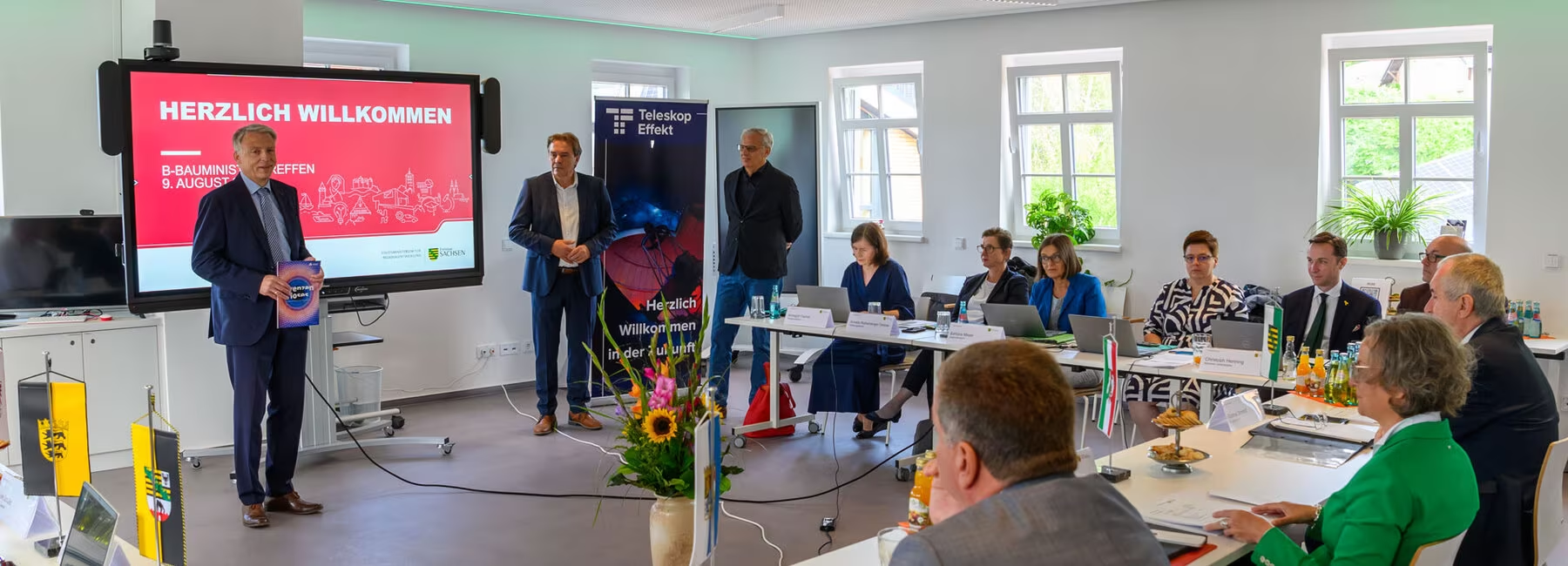
A Mittweida “trio” comprising the university’s rector, Professor Volker Tolkmitt, Mayor Ralf Schreiber and Volksbank board member Michael Schlagenhaufer, presented their exemplary collaboration on the development of the town and region at the meeting of CDU and FDP ministers for construction held on 9 August in the university town. “Trio” was the headline chosen by Thomas Schmidt, whose remit as Saxony’s Minister of State for Regional Development also includes construction. He had invited his seven ministerial counterparts to Saxony for two days. Following the ‘compulsory’ programme on the first day in Chemnitz, the 2025 European Capital of Culture, the conference’s agenda for the second day featured the ‘optional’ part: Mittweida – which Schmidt described as a ‘model town’. He had already emphasised this on a previous occasion.
The group met at the Werkbank 32 innovation centre. Instead of the usual welcoming remarks, the trio representing academia, business and public administration described – with the two most recent joint projects, the ‘Telewerk’ and “AMSEL”, how the partners in Mittweida are pulling in the same direction, supported in this by the Regional Ministry through its “simul+InnovationHub”.
Rector Volker Tolkmitt, who is also the project manager for Telewerk, said: “It is not just the network concept behind simul+ – bringing together the right stakeholders who want to make a difference and shape the future – but rather the vote of confidence shown by policymakers in these stakeholders. The Saxon Ministry for Regional Development is setting an example in this regard.” Tolkmitt continued: “And we must be open about this: it’s all being done as unbureaucratically as possible.”

Cutting red tape is also one of the demands set out by the ministers in their ‘Mittweida Declaration: Strengthening housing construction in urban and rural areas – stabilising rural areas – relieving pressure on conurbations’. At the press conference held at the Telewerk to mark the conclusion of their conference, they presented the declaration to the public.
Model neighbourhood in a rural area
The complex of buildings in Mittweida, comprising Telewerk and the AMSEL tiny house, serves as an experimental platform for the future of working and living in rural areas. Cybersecurity, sustainability in terms of energy and construction, and social issues are all central to the ongoing scientific research being carried out there.